


Commission and African academies address challenges and opportunities for closer cooperation in science
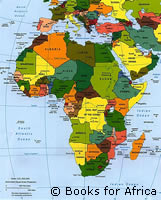
The European Commission met with the representatives of African science academies, ministries and embassies on 6 February in order to address the practicalities of establishing closer cooperation in science and technology. The debate addressed the challenges of participation in EU programmes, capacity-building in Africa and ethical aspects of research in developing countries, as well as the opportunities represented by the Seventh Framework Programme (FP7) and the FP6 call of 15 February for organisations to join ongoing projects. In his address to the meeting, Mr Andras Siegler, Director of International Scientific Cooperation in the Commission's DG Research, noted that this was his first opportunity to meet the representatives of the African Academies of Sciences. In contrast, the broader EU partnership with Africa is 25 years old, he remarked, having formally begun with the Lomé agreement that established a special status for the African, Caribbean and Pacific (ACP) countries. The Commission's 2005 communication on a new 'EU Strategy for Africa' has re-emphasised the aim of promoting the achievement of the Millennium Development Goals (MDGs) for Africa. The role of science and technology in addressing the MDGs has been emphasised increasingly since the conference on research for sustainable development held with the ACP countries in Cape Town, South Africa in July 2002. It received a further boost last year in both the UK's Commission for Africa report and the G8 summit held in Gleneagles in July. When the African Union (AU) endorsed the EU Strategy for Africa document in October 2005, the AU Commissioner for Science and Technology, Dr Nagia Mohammed Assayed, also met the EU's Science and Research Commissioner Janez Potocnik. Many of the academies represented at the meeting are now members of the Network of African Science Academies (NASAC), formed in 2001 to work closely with the AU and NEPAD, the New Partnership for Africa's Development. Professor Mugambi, President of the Ugandan National Academy of Sciences, explained that although NASAC currently comprised 13 member academies, the organisation aims to include representatives from all 53 member countries of the African Union. One focus of the meeting was the opportunity offered by EU research programmes for less formal and more practical partnerships. While emphasising that it is just one policy among many European initiatives for development and cooperation, Mr Siegler introduced some of the relevant proposals for the Seventh Framework Programme for research (FP7). The three principles of the proposals for international cooperation in FP7 begin firstly with the aim to deliver competitive advantage for Europe in the global economy. This is to be delivered via increased research and development cooperation in general, especially with developing and emerging economies, and by increasing the attractiveness of the EU for researchers. Under the People programme of FP7, Marie-Curie International Fellowships support exchanges and work-stays for non-European researchers. The introduction of reintegration grants and the new 'scientific visa' Directive also aim to facilitate these exchanges. A second principle for international cooperation in FP7 is supporting research of mutual benefit and interest. This translates into addressing global needs and reinforcing EU policies and external relations, while improving the cost-effectiveness of research and capacity building. Thirdly, EU research should address critical and specific needs. This problem-solving aspect requires multidisciplinary and complementary expertise. International cooperation and partnerships can help in bringing such skills together. The FP7 Ideas programme proposes establishing a European Research Council, awarding funding for frontier research to individual research groups based on Europe-wide competition. Even here, participation by researchers outside Europe is possible on an individual basis, where it is based on mutual benefit. The Capacities programme also includes a sub-chapter on international cooperation, supporting the creation of networks for coordinating national policies, finding synergies and establishing policy dialogues. The Cooperation programme will include funding for cooperation with non-EU or Associated countries across all the research themes, as is already the case in FP6. A speaker from Tanzania, while welcoming this, emphasised the lack of capacity to participate effectively both in research and in policy debates. Many of the African participants emphasised the difficulty of finding project partners and joining European research consortia, while the Commission noted that even within the EU Member States there is a lack of understanding that FP6 thematic programmes have always been open to participation from non-EU or associated countries. In fact, it was emphasised, even European Technology Platforms are open to international cooperation and participation. Representatives of DG Development and EuropeAid introduced other EU policy initiatives that aim to bring development and research policy into closer coherence, particularly in terms of capacity building. EuropeAid has prepared a programme, EDULINK3, to support ACP-EU cooperation in the field of higher education. The programme will include funding for capacity building in research and technology, where it will improve academic and teaching excellence, consolidate local research capacity, or import, or adapt, scientific discoveries and innovations. The first calls for this programme are expected in the second half of 2006, while a Programme for Science and Technology Innovations and Capacity Building, also funded via EuropeAid, is expected to launch in the second half of 2007. Ethical aspects of research are especially important in developing countries, and the FP6 Science and Society programme already has several projects active in the areas of clinical trials, benefit sharing of genetic information and capacity building for ethical review. All EU funded research with ethical aspects must undergo ethical review (11 per cent of FP6 projects so far) and, while trying to avoid perceptions of 'ethics colonialism', research carried out in non-EU countries must comply with the same standards. One African academy representative emphasised that there are reasonably well-founded systems of ethical review in Africa, but added that issues such as ownership of research and genetic data are a concern. Professor Crew of the South African Academy of Science also raised the question of access to scientific information. Maurizio Salvi of DG Research commented that WIPO and the WHO continue to work together on benefit sharing and patents, while the WHO is working with ethics committees to establish guidelines that take into account the specific needs of developing countries. Work is currently on track to be ready in 2007. On a practical note, the meeting included an overview of the thematic priorities of FP6 that are announcing a 'top-up' call to give an opportunity to organisations from outside the EU and associated countries to join up-and-running projects. Around 20 million euro will be available to fund organisations in 'INCO target countries' (among the world's poorest). An overview of the FP6 thematic priorities revealed a trend towards greater international cooperation: from the need for social sciences to become less Euro-centric in the face of globalisation, to the necessity of building research infrastructures with international scope. The programme on sustainable development, global change and ecosystems is just one where cooperation extends outside Europe. The meeting heard that many projects on environmental and climate change would be impossible without African participation. The European-South African Science and Technology Advancement Programme was introduced as an example of an FP6 support action that facilitates networking and partnerships between the research communities of South Africa and the EU. There was a broad consensus that there is a demand to extend such an initiative, with a broader geographic scope, perhaps for the whole of Africa. Research is inherently mobile, Cornelis-Mario Vis of DG Research said, and the EU aims to create a single European market for researchers. The new Directive on a scientific visa should give non-EU researchers freedom to move within the EU with the same rights as Member State nationals. There was some debate around moving away from a 'brain drain' and 'brain gain' paradigm towards the idea of 'brain circulation', and some disagreement on how this could be achieved in practice. One initiative being pioneered by NASAC is the establishment of a database of the African scientific diaspora. This would help to maintain contact with, and perhaps use the expertise of, researchers of African origin working abroad.