


Does Europe need a new research facility for safety testing in enclosed spaces?
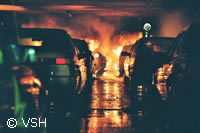
An EU-funded project is carrying out an assessment of the current research infrastructure and priorities in the field of safety and security of enclosed underground spaces, with a view to the possible establishment of a new pan-European research facility. The L-SURF (large-scale underground research facility) project will assess the potential for coordinating existing research infrastructures in Europe, as well as study proposals for a new purpose-built facility, in order to assess which option would best integrate European research in this field. The partners are drawn from Switzerland, France, Norway, Sweden, Germany and the Netherlands. The need for a coordinated European approach to research into underground safety and security has been put into sharp focus in recent years, following a number of high profile incidents such as the Mont Blanc tunnel fire in 1999 and last year's metro bombings in London. The belief, certainly among the L-SURF partners, is that national efforts are currently too fragmented to respond to challenges such as these. 'The facility at which I work, for instance, was built 35 years ago,' Maximilian Wietek, from the Hagerbach Test Gallery (VSH) in Switzerland, told CORDIS News. 'The nature of the threats and the infrastructures that could be affected by them are constantly changing, and so must our research facilities.' Although he does not wish to second-guess the result of the consortium's investigation, Mr Wietek suspects that the aims of the research community would be best achieved by constructing a new facility. 'This is due to the limited research possibilities in existing infrastructure,' he explained. One particularly promising option would be to build a facility based on a new concept whereby researchers can easily recreate an endless variety of enclosed spaces of different contours, sizes and shapes. 'Computer simulations and small and medium scale experiments are useful, but they don't always reveal every possible problem that can occur in an enclosed space,' said Mr Wietek. 'Building designers, for example, often want full scale experiments to test fire extinguishing systems to ensure that they work properly.' Specialist training for fire fighters working in enclosed spaces is also best carried out in full scale conditions, he added. The cost, not only of building a new facility but also of equipping it with ultra-modern sensors and testing technology, is obviously a key challenge. But as Mr Wietek explains: 'It may be better to locate this technology in one facility, as it can be very expensive. We will be able to do a lot more if we cooperate and share the costs.' The other challenge, he acknowledges, is achieving a sufficient level of coordination within the various research groups and other stakeholders in Europe, each of which has its own culture and research priorities. However, Mr Wietek is confident that the broad range of nationalities and types of organisation included within the L-SURF consortium, including private companies, research laboratories and public safety bodies, will help it to reach this goal. Ultimately, the next step after the analysis has been completed will depend very much on the outcome of the project. 'At the end, we will see who would like to participate further and in what form, but it will be the final results of the study that will guide us,' said Mr Wietek. To ensure that the partners are prepared for all possible outcomes, the project will look at funding options, business plans and legal considerations for the creation of a new entity (perhaps based on models such as CERN) that could oversee the construction and management of a new facility. The crucial remaining question in the event that a new infrastructure is given a green light will be where to construct it. The potential environmental impact and legal constraints will have to be taken into account, but Mr Wietek indicated that one potential option would be to locate the new facility in one of the new Member States. Whatever the final outcome of the study, by introducing an international dimension to this field of research, the partners hope that L-SURF will go some way towards improving safety and security in Europe's enclosed underground spaces.
Countries
Switzerland, Germany, France, Netherlands, Norway, Sweden