


Evolution of life drove evolution of planet
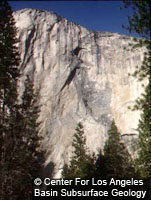
New research from an international team led by a Danish researcher suggests that early life on Earth may have provided the catalyst for the development of the continents. This contradicts the generally-held assumption that the continents provided a platform for life. The research, published in the journal Palaeogeography, Palaeoclimatology, Palaeoecology, provides a possible answer to two persistent questions that have puzzled geologists for years - why the Earth's continental crust appeared when it did, and where granite, a rock not found elsewhere in the solar system, came from. Formed 4.6 billion years ago, the Earth was featureless for the first 600 to 800 million years, with the first recognised areas of continental crust dating back about 4 billion years. These can still be seen in Acasta, Canada. The Acasta rocks are formed from granite or a similar material. Granite is created when volcanic rocks melt and reform, reacting with minerals in the earth and in water. The volcanic rocks are denser than the granite, so over long periods of time, the granite 'floats' on the volcanic rock, leaving a stable crust - the continental shelf. However, the puzzle is not the process of how granite formed, but why it took so long to begin forming - all the necessary materials were present long before. The international team from Denmark, the US and France, led by Minik Rosing from the Geological Museum and Nordic Centre for Earth Evolution, part of the University of Copenhagen, believes primitive plant life is the missing catalyst. 'With evolution of photosynthesis, living organisms acquired the ability to harvest solar energy and channel it into geochemical cycles,' reads the report. This would have increased dramatically the energy in the planetary cycle not derived from the earth itself - these plants captured energy directly from the sun, feeding that energy into the biosphere. This additional energy could have acted as a catalyst, driving chemical changes in the earth itself. 'The energy capture from photosynthesis is used to keep oceans and atmosphere out of chemical equilibrium with the rock,' Dr Rosing told the New Scientist. The addition of this energy contributed to patterns of weathering. This weathering is highly significant. 'The key point is that melting basalt [volcanic rock] makes basalt again, while the melting of weathered basalt produces a small amount of granite. Life might, in the end, be responsible for the presence of continents on Earth.' However, some critics have pointed out that just because granite has not yet been found elsewhere in the solar system, this does not mean it does not exist there.
Countries
Denmark, France, United States