


Is Europe good for SMEs?
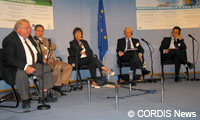
Towns and cities around Europe put the spotlight on small and medium sized enterprises (SMEs) during June, and the European Commission played its part by putting small companies at the top of the political agenda on 12 June. Under the heading 'Europe is good for SMEs, SMEs are good for Europe', the Commission gathered politicians and representatives from business associations to Brussels, to discuss what has been done, and more importantly, what still needs to be done for SMEs. The Commission's two main priorities, as outlined by the Deputy Director-General of the Enterprise and Industry DG, Françoise Le Bail, are reducing bureaucracy for SMEs, and cutting the costs of administration. According to Ms Le Bail, EU investment channelled into small companies, as well as various policy initiatives and the forthcoming Competitiveness and Innovation Framework Programme (CIP) show that 'We are putting our money where are mouth is where SMEs are concerned.' Speakers welcomed the Commission's support, but outlined new priorities. German MEP Jorgo Chatzimarkakis, rapporteur for the CIP in the European Parliament, focused on communication. He said that information should be more readily available for SMEs, and on what SMEs are achieving. He called for an 'SME Bible', where companies can find out where they can find funding, and what tools they can use to find partners. A recent survey found that 88 per cent of French SMEs knew nothing about EU SME activities. Europe also needs to publicise its SME successes, said the MEP. He referred to Skype, the Internet telephone service, which was developed in Luxembourg. 'People who use Skype don't realise it was developed with European knowledge and money,' he said. Arnaldo Abruzzini, Secretary General of EUROCHAMBRES, referred to his home country - Italy - to point out that a high number of SMEs does not necessarily translate to economic growth. Italy has six million SMEs, but does not have a particularly strong economy. 'The spirit of entrepreneurship and a risk-taking attitude are not there,' he said. Integrating entrepreneurship into school curricula is a priority for EUROCHAMBRES, along with facilitating access to finance. The importance of education was echoed by EU Commissioner for Enterprise and Industry Günter Verheugen. 'We need to encourage people to be brave enough to be entrepreneurs,' he said, adding that students should be running mini companies. Such an initiative has been very successful in Norway, and has given many the confidence to go on and found a company, he said. The Commissioner also announced that he is in discussion to extend the student exchange programme ERASMUS to apprentices. The Secretary-General of UNICE (Union of Industrial and Employers' Confederations in Europe), Philippe de Buck, highlighted a number of areas where he would like to see progress at a European level. He referred to an 'institutional crisis' within the EU, where rapid decision-making is difficult. He called for an end to protectionism and for the further enlargement of the EU. 'We know all the difficulties, but enlargement has created huge opportunities. We still have a positive balance from West to East, rather than the other way,' said Mr de Buck. Mr de Buck also referred to the forthcoming Seventh Framework Programme (FP7), the EU's funding programme for research. He welcomed the increase in funding and the progress made towards easing participation for SMEs. He underlined the importance of intellectual property, and asked for more to be done to protect the knowledge of SMEs. Mr Verheugen finished with good news for Europe's SME community: not only has the Commission planned a communication on the accessibility of SMEs to all EU programmes, but Finland has decided to make innovation the focus of its EU Presidency, which will run for six months from 1 July 2006. Intellectual property, technology transfer and cluster formation will therefore be at the top of the EU's agenda for at least the next six months.