


Live fish trade threatening coral reefs
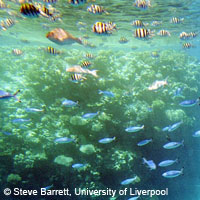
Leading marine scientists are calling for urgent action by governments to control the live reef fish trade, which they say is now a major threat to coral reefs around the world. Coral reefs are facing a wide range of pressures, including pollution, over-fishing and coral bleaching due to warmer sea temperatures. According to a 2004 report on the status of the world's coral reefs, 20 per cent have been effectively destroyed by human activities, and 50 per cent are at risk of collapse. Since the 1970s, the trade in live reef fish has grown steadily and now represents a serious threat to the world's coral reefs. For some people, choosing a live fish from a tank is the highlight of a visit to a luxury seafood restaurant. However, many of the fish on offer are endangered, and their large-scale removal from the reef food chain has knock-on impacts on the reef. In particular, the coral-eating crown-of-thorns starfish often thrives in these situations. In a letter published in the current issue of the journal Science, the scientists call on governments and authorities at all levels to impose stricter regulations on the exploitation of coral reef resources. 'Due to high international demand for live fish, roving bandits deplete coral reef stocks before local institutions have time to implement laws to regulate the poaching,' the scientists note. They argue that urgent action is needed to establish institutions that are able to learn from experiences with the roving bandits, and respond quickly to shifts in demand from global markets. The scientists also point out that the strongest argument for regulating the trade in reef fish is the social inequity that arises from the over-exploitation of reef resources. 'Once those resources are destroyed and forgotten, it is the local people who bear the costs of reduced options for future development,' they warn.