


Spring springs earlier
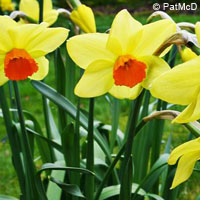
A pan-European study has found that spring is starting six to eight days earlier than 30 years ago. The authors believe the culprit to be global warming. In some more southern areas, such as Spain, spring begins a full two weeks earlier than 30 years ago. If William Wordsworth took his walk around the UK's Lake District that inspired his ode to springtime, 'Daffodils', some time around the end of March 1804, today he could have taken the same walk, and found his daffodils, around the beginning of March. The study was led by Dr Tim Sparks of the Centre for Ecology and Hydrology in the UK and Dr Annette Menzel from the Technical University Munich in Germany. They coordinated a team in 21 countries between 1971 and 2000, looking at 125,000 sets of data, making the study the largest of its kind ever conducted. The team investigated climate change by looking at phenological - naturally recurring - events. To do this, they examined the behaviour of 542 plant and 19 animal species during this time. 'Unlike some studies that record individual species, this is the first comprehensive examination of all available data at the continental scale, using around 550 plant species, and the timing change is clear, very clear,' said Dr Menzel. The researchers found, '78 per cent of all leafing, flowering and fruiting records advanced (30 per cent significantly) and only 3 per cent were significantly delayed,' reads the report. They concluded that spring has been arriving earlier by an average of 2.5 days per decade during this time. The study is unique in that the advance of spring has been linked explicitly to climate change for the first time. 'Our analysis of 254 mean national time series undoubtedly demonstrates that species' phenology is responsive to temperature of the preceding months,' reads the report. 'Not only do we clearly demonstrate change in the timing of seasons, but that change is much stronger in countries that have experienced more warming,' said Dr Sparks. 'Many plant species grow throughout Europe, so, for example, a direct comparison of the flowering date of wild cherry which is two weeks earlier in the UK with that in Austria which is only 3 days earlier is possible with this huge dataset.' The study was funded by COST - European Cooperation in the field of Scientific Research - which is itself supported under the European Union's Sixth Framework Programme (FP6).