


Commission sets out measures to speed up digitisation of Europe's cultural heritage
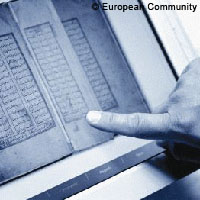
The European Commission has outlined measures which it says will help Members States better coordinate and accelerate the digitisation and online accessibility of their cultural heritage. Proposals range from setting up large scale digitisation facilities and national strategies to plans for the long-term preservation of and access to digital material. Published on 25 August, the proposals are part of the Commission's overall strategy to make Europe's written and audiovisual heritage available on the Internet, as set out in its 'i2010: digital libraries' initiative. Building on the European Library (TEL), in which a number of European libraries already collaborate, by 2008 the European Digital Library could hold up to two million books, films, photographs, manuscripts, and other cultural works. By 2010, the library could have as many as six million digital works. Through European Digital Library, users will be able to search in their mother tongue different collections from Europe's libraries, archives and museums without having to visit multiple sites. 'Our aim is to arrive at a real European digital library, a multilingual access point to Europe's digital cultural resources,' said Information Society and Media Commissioner Reding. 'It will allow, for example, Finnish citizens to easily find and use digital books and images from libraries, archives and museums in Spain, or a Dutchman to find historical film material from Hungary online.' However, there is a colossal amount of material that must be digitised before then, and this quantity is increasing. Estimates suggest that our society has created and stored 100 times as much information since 1945 as in the whole of human history up to that point. Another study suggests that the world's total annual production of print, film, optical and magnetic content would require roughly 1.5 billion gigabytes of storage, that is 250 megabytes per person - equivalent to 250 books, 250 minutes of music, or 250 photographs. Despite the many digitisation initiatives currently underway in Member States, only a fraction of available information is digitised, and the efforts are fragmented. The Commission says that in order to move forward, Member States need not only to invest more, but also tackle the organisation of digitisation, online accessibility and digital preservation of material. It made the following recommendations: - setting up of large-scale digitisation facilities; - clearly indicate what has already been digitised and outline further plans. This will help to avoid overlap and to create collections with European added-value; - encourage partnerships between cultural institutions and the private sector; - promote the development of the European Digital Library as the multilingual access point to Europe's cultural heritage. This can be done, for example, by specifying conditions for funding to cultural institutions for digitisation work. - look at and work towards concrete solutions on copyright issues, for example mechanisms to deal with 'orphan' works (copyrighted works whose owners are very difficult or impossible to locate) and works that are out of print; - establish national strategies and plans for the long-term preservation of and access to digital material; - adapt legislation, where necessary, to allow multiple copying and migration for preservation purposes, and to tackle the issues of web-preservation and the deposit of digital material for preservation purposes. For its part, the Commission says that it will contribute in areas where there is most European added-value, but will not fund the basic digitisation. It has earmarked € 60 million within the eContentplus programme to co-fund networks of 'centres of competence' for digitisation and for digital preservation.