


Green Paper on detection technologies proposes greater public-private partnership
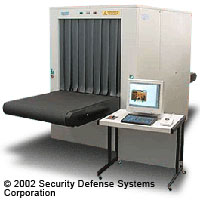
The European Commission has opened public consultation into its recently adopted a Green Paper on detection technologies for law enforcement authorities. The Green paper proposes a common public-private sector approach to the research, development and standardisation of detection systems across the EU. Detection technologies form an increasing part of the daily work of security authorities, to fight terrorism and other forms of crime. They are widely used to protect passengers when boarding aeroplanes, fans when watching their favourite sports events, and to detect dangerous substances in the air, water or food. Security authorities also use these technologies to protect our borders and check goods entering the European Union. Moreover, detection technologies are used for guarding private property and critical infrastructure. According to European Commission Vice-President Franco Frattini, responsible for Justice, Freedom and Security, the current geopolitical climate means these systems are needed more than ever before. 'Recent events in the UK have further underlined that detection devices must be continuously improved in order to reflect the ever changing threat posed by terrorists and criminals and to ensure that people are able to travel safely. Modern detection technologies have therefore an important role to play in the fight against crime and terrorism,' he said. A great deal of work has been achieved Member States, industry and stakeholders in developing such detection systems, and by the Commission in ensuring common standards are established. Two EU regulations were adopted, in 2002 and 2003, that provided detailed requirements for the performance of screening equipment used in aviation security. In this same field, standards and test protocols have been established in close cooperation with the European Civil Aviation Conference, which links experts from the appropriate authorities of EU Member States and other countries. In addition, the Commission is regularly in close contact with industry and other stakeholders. However, the Green Paper suggests there is still room for improvement. It recommends greater interaction between the public and private sectors in order to ensure a common approach to standardisation, research, certification and interoperability of detection systems. More also needs to be done in order to transform research results into useful applicable tools. 'A virtuous circle has to be established in which the private sector is guided in its research effort and expenditure by a public sector that knows what it wants and what the private sector can offer. This should help to develop an advanced market in detection products and security solutions, which in turn should lead to greater availability of products and services at lower cost,' reads the Green paper. It goes on to suggest that a temporary body could be set up to serve as a forum for experts from both public and private sectors to discuss the issues raised in the paper as well as those raised by stakeholders in the public consultation. The Green Paper will be the subject of further discussion at the forthcoming conference 'Enhancing the security of explosives' which will take place in Brussels 9-10 October. The conference will bring together the public and private sectors to discuss areas such as: components of explosives including liquids, detection, traceability and transport and storage. An action plan will be drawn up based on the replies to the questions outlined in the paper, and if necessary, further consultation.