


Study highlights role of abatement technologies in tackling global warming
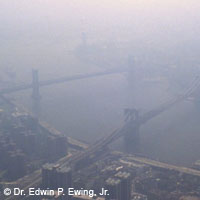
Enforcing current worldwide air quality protocols may not be enough to reduce the environmental damage caused by elevated nitrogen emissions and increased ozone concentrations - only the implementation of abatement technologies could counteract air pollution and global warming. These are the main conclusions of a study conducted by scientists from the Joint Research Centre (JRC) of the European Commission and ACCENT, an EU funded network of researchers. Writing for the Environmental Science and Technology Journal, the scientists explain how they evaluated the likely changes that would occur in the global atmospheric environment between 2000 and 2030. They used a set of 26 global chemistry models and three different emission scenarios. These scenarios showed that enforcing legislation has very little impact on reducing the level of global emissions and air pollution. If protocols were implemented, scientists estimated that by 2030, surface ozone gas levels would increase globally by approximately 5%, and would further increase by 15% should no action be taken. Only in the scenario where stringent abatement technologies were introduced to address the emission levels of nitrogen oxides (NOx) and volatile organic compounds (VOC), did scientists find a decrease, by as much as 8%, in the level of surface ozone concentrations. Unlike the protective layer of ozone that forms in the Earth's upper atmosphere (stratosphere), surface ozone gas is a harmful pollutant. It is produced when substances such as carbon monoxide, methane or other similar compounds react with nitrogen oxides resulting from traffic, industry or domestic energy use (heating or cooking). At surface level, the gas is thought to aggravate symptoms of pulmonary diseases and increase rates of asthma attacks. Ozone is also a greenhouse gas and so contributes to global warming. The study is a timely reminder to governments worldwide of the need to step up efforts to tackle the problem of global climate change, and to agree to common approaches, such as that defined in the Kyoto Protocol, and future pacts to reduce air pollution. The next step for the JRC and ACCENT scientists will be to develop practical guidelines on how to implement the findings of the study.