


Commission grants EUR 2.8 million to cancer camera project
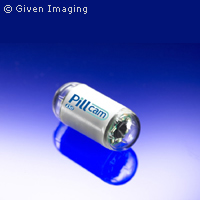
A European consortium has received a EUR 2.8 million grant from the European Commission to develop a camera that can be ingested to obtain images of the digestive tract. The three year EU funded project entitled 'Nano-based capsule endoscopy with Molecular Imaging and Optical Biopsy', or 'NEMO', will combine optical imaging with nanotechnologies, biosensing and manoeuvring to create an integrated imaging-biosensing system to screen for cancer of the gastrointestinal (GI) tract. The objective of the NEMO project is to make cancer screening more patient-friendly through the development of an advanced cancer screening system. The system will consist of a PillCam capsule endoscope capable of analysing secretions and detecting deep tissue disorders, a datarecorder on a belt that receives signals transmitted by the capsule, and a workstation enabling physicians to view and edit the video of the small intestine images. The consortium believes that using a combination of image and molecular analysis to find the tumour could provide a new medical device for the mass screening of GI cancer. 'The project is committed to develop new and innovative solutions to help physicians treat their patients and could represent a revolutionary platform of biopsy free procedures,' said Elisha Rabinovitz, the chief scientist at Given Imaging, the company leading the consortium. The European Commission agreed to provide €2.8 million towards the total cost - slightly more than half of the total amount needed. This is because, under the rules of the Commission's Sixth Framework Programme (FP6), commercial companies can claim 50% of their costs, while academic institutions can claim up to 75%. Meanwhile, the company behind the PillCam capsule has been heralded as one of the World Economic Forum's 2007 Technology Pioneers for its innovative camera the size of a vitamin tablet.