


Germany to build structural biology facility
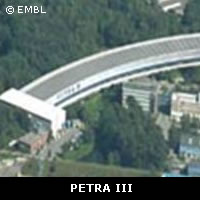
Europe's role as a key player in the life sciences looks set to dramatically increase with the announced construction of an integrated research facility for structural biology in Hamburg, Germany. The facility is expected to be operational by 2010. Funded by the German Federal Ministry for Education and Research (BMBF) to the tune of €8.8 million, the new facility will comprise a complete and automated pipeline for structural investigations of proteins and other biological molecules using high-energy x-rays. Dubbed EMBL@PETRA-III, the facility will be located at the Hamburg outstation of the European Molecular Biology Laboratory (EMBL), where structural biologists will be able to use the high-energy radiation of PETRA-III at the German Synchrotron Research Centre (DESY). Molecules that determine our life, such as proteins and DNA, are too small to be observed using even the most sophisticated light microscopes. By using x-rays instead, life scientists can acquire high-resolution images of proteins involved in diseases. These pictures serve as the starting-point for the development of new drugs. For example, in the last four years, using x-rays, EMBL Hamburg has uncovered the structure of over 30 proteins involved in causing tuberculosis, and has identified several potential drug targets. EMBL@PETRA-III will enable researchers to investigate protein machines of unprecedented complexity and size and provide a unique opportunity to carry out pilot experiments in life sciences. The new facility and its services will be open to structural biologists from all around the world and user time will be allocated according to scientific merit. 'This unique facility will allow us to go beyond current physical limitations and to tackle problems that were out of reach in the past,' says Thomas Schneider, Project Coordinator of EMBL@PETRA-III. 'It will not only strengthen Europe's role as a key player in the life sciences, but will also further raise the profile of the city of Hamburg in the European research landscape.'
Countries
Germany