


Dutch research raises Brussels profile with launch of Neth_ER
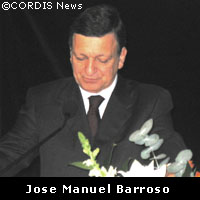
The Netherlands House for Education and Research, to be known as 'Neth-ER', received endorsement at the highest level on 21 February, when it was officially opened by Commission President José Manuel Barroso. 'The establishment of Nether in Brussels is a sign of the fact that the European institutions are competent of building a society of knowledge,' construed the Commission President. The President of Neth-ER, Frans van Vught, explained the reasoning behind Neth-ER to CORDIS News: 'The objective is to make sure that all research and education organisations jointly create a better presence for themselves in Brussels, in relation to the EU and beyond,' he said. Under this broad objective, two specific goals are to ensure that these Dutch organisations become more influential during the development of policy, and to increase the access of the organisations to EU funds. 'We wouldn't be Dutch if this weren't the objective,' joked Tom de Bruijn, the Netherlands' Permanent Representative to the EU, during the launch event. Mr van Vught believes that Dutch research is very well known outside of the Netherlands. There are several Dutch universities among the most eminent universities in the world, he says, but adds that his country can still do better. Neth-ER should help to raise the international profile of Dutch research. Neth-ER currently has eight members, drawn from research, education and vocational training. Each member has contributed financially, and the House has also received funding from two government ministries for an initial period of five years. The plan is that Neth-ER will be self-sufficient after that time. Mr de Bruijn, speaking on behalf of the Dutch Minister for Education, Culture and Science, called on other organisations to join Neth-ER, including those representing the primary education sector. 'But it's not for us to decide who joins. The organisations have to discover Neth-ER for themselves,' he said. Mr de Bruijn highlighted how some smaller, potential members may not have signed up to Neth-ER due to the membership fee. He called on the House to therefore consider introducing other forms of membership. Neth-ER has adopted the same strategy as the Commission, according to Mr Barroso: it brings together the three sides of the knowledge triangle - research, education and innovation. 'I believe that others will follow,' he said. The proposed European Institute for Technology (EIT) is designed to facilitate this process, and to overcome the institutional and psychological barriers inherent in bringing together the three sides of the knowledge triangle, claimed the Commission President. 'The EIT will be part of a new and improved landscape, in which the Netherlands House for Education and Research will function,' Mr Barroso concluded.
Countries
Netherlands