


Mangroves to the rescue!
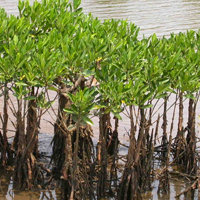
Due to limited resources, the bulk of domestic wastewater in many developing countries is discharged without any treatment at all. PUMPSEA, an EU-funded project, has come up with a water treatment system using mangroves, which project partners believe is the most cost-effective way to mitigate coastal sewage pollution in sub and tropical developing countries. Funded under the international scientific cooperation (INCO) section of the Sixth Framework Programme, the three-year project brings together partners from Belgium, Denmark, Germany, Italy, Portugal, Sweden, Kenya, Mozambique and Tanzania. The overall budget of the initiative, which started in 2005, amounts to €1.78 million. For some time now, scientists have been interested in mangroves and their ability to filter water, not just of nutrients, but also of poisons and other contaminants. 'Several years ago in Mozambique, local populations were found to be discharging sewage into the mangroves, but the quality of the water was still good,' explains José Guerreiro, PUMPSEA coordinator. To test the plants' natural ability further, the project team built a 30-metre mangrove plot with 32 test cells at Jangwani, a popular tourist coastal area in Dar es Salaam in Tanzania. Using sewage from a local hotel, the researchers assessed the ability of different species of mangroves to treat the effluent. Avicenia marina - one type of mangrove tree - showed to be most effective in removing pathogens from the sewage. Irrespective of the amount of sewage, the researchers found a 90% reduction in the level of faecal coliform bacteria in the water. In many of the plotted cells, coliforms were not even detectable in the water exiting the mangroves. 'The results were very encouraging,' Dr Guerreiro told CORDIS News. 'It proves that the system using mangroves works.' Not only could the system provide cleaner water to local populations, it could also bring significant economic gains. The hotel involved in the experiment claims it made huge savings from not having to pay someone to come and empty its septic tank. It is estimated that over a year the hotel could save around €22,000 by using the project's treatment system. In order to test the methodology at a real scale, the consortium has constructed a larger wetland and is currently in negotiations with several hotels in the Dar es Salaam area to link them to it. 'We are also talking to the municipal authorities to choose a neighbourhood where we can test our methodology to deal with the sewage,' said Dr Guerreiro. Constructed wetlands have proven very effective for the treatment of a variety of wastewaters. The use of treatment wetlands is well established in Europe, where the technology originated with laboratory work in Germany 30 years ago. But little work has been done in developing countries, where the concept of constructed wetlands for wastewater treatment is still a relatively new idea. Dr Guerreiro hopes that the results of the project's experiments will convince authorities of the effectiveness of mangroves as water treatment systems and the need to conserve them. The project has now fully digitally mapped out the main mangrove areas in Mozambique, Kenya and Tanzania, detecting areas which have been deforested, and indicating the impact of sewage pollution and the suitability of some areas for strategic conservation. 'Our system is much cheaper than traditional sewage treatment methods and is more applicable to the reality,' he claims. The consortium is now making its case in meetings with government authorities dealing with waste water treatment and sanitation. By the end of the project, the consortium aims to develop a strategic plan for the use of mangrove sewage filtration and transform its findings into appropriate governance guidelines.
Countries
Belgium, Germany, Denmark, Italy, Kenya, Mozambique, Portugal, Sweden, Tanzania