


New project offers hope for children with lethal infection
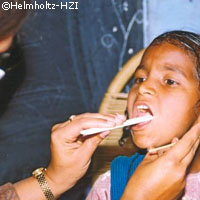
A bacterial infection which can cause disability and even death is the focus of the new, EU-funded ASSIST project, which brings together Indian and European scientists working on the streptococcus bacteria. Every year around 600 million people around the world become infected with streptococcus bacteria. Most will experience nothing worse than a sore throat, but two million will go on to suffer from complications such as rheumatic fever, a disease which affects the joints and heart valves. Rheumatic heart disease is most commonly found in children, and often a heart valve transplant is needed to save the child. It is particularly a problem in India, where six million children have the disease, out of a total of 15 million worldwide. Only a small percentage of streptococcal strains cause serious disease. The ASSIST project partners, lead by the Helmholtz Centre for Infection Research in Germany, aim to develop a test which will enable doctors to quickly identify which patients are infected with more dangerous streptococcal strains. 'If we had an effective test to quickly diagnose whether a patient is infected with a dangerous strain, then we could concentrate on those cases,' explains Project Coordinator Professor Singh Chhatwal of the Helmholtz Centre. The Indian project partners will take and evaluate throat swabs from 25,000 Indian children, to gain information on the main streptococcal strains currently prevalent in the country. The researchers hope that they will be able to identify genes or molecules which are found exclusively in dangerous strains of the bacteria. They will also look into why some people seem to be more predisposed to infection by dangerous pathogens than others. The full title of the project is 'comprehensive approach to understand streptococcal diseases and their sequelae to develop innovative strategies for diagnosis, therapy, pre-vention and control'. The EU is contributing €1.5 million to the project from the International Cooperation budget of the Sixth Framework Programme.
Countries
India