


Nobel laureates celebrate 50 years of the EU and look to the future
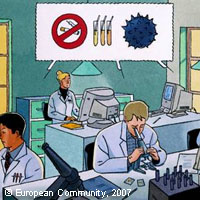
The past, present and future of the EU is science, according to several speakers at an event to mark the 50th birthday of the EU, and attended by several European Nobel Prize winners. The work for which all of the laureates had been recognised was 'built on a vision of the future, and on our 50th anniversary we too should be looking to the future,' said the President of the Parliament, Hans-Gert Pöttering. Professor Sir Timothy Hunt shared the Nobel Prize in Physiology or Medicine in 2001 for the discovery of cyclins, a class of protein. He praised the advent of the European Research Council (ERC), which he believes 'promises to really strengthen European science'. Prof Hunt also appealed for more freedom for science in academic institutions, and expressed concern that researchers today sometimes appear 'afraid to excel', which naturally hinders scientific achievement. Perhaps this phenomenon contributes to the fact that Europe's universities are by far outdone by those in the US. 'It is a shameful fact that among the top 20 universities in the world, 15 are in the US, 1 in Japan, 3 in the UK and 1 in Switzerland. Think about that!' he said. Professor Carlo Rubbia won the Nobel Prize for Physics in 1984. After speaking of the tragic events of the 20th Century that led to the birth of the EU, he emphasised the 'indispensable and fundamental role of science in development'. Prof Rubbia praised CERN, the European Organisation for Nuclear Research, as did Professor Martinus Veltman, the winner of the 1999 Nobel Prize for Physics. He argued that the CERN principle of having only two working languages should be applied to the EU institutions. Other laureates spoke of progress in monetary union, human rights, peace and poverty.