


EU palpable computing project cruises through its first test
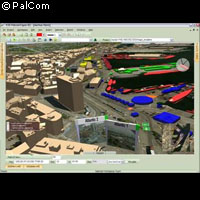
An EU-funded project into palpable computing has cruised through its toughest test to date. While some 750,000 visitors enjoyed the more than 100 ships taking part in the Tall Ships Race - the world's biggest race for sailing ships - the PalCom (Palpable Computing) project was busy deploying its experimental prototypes to help the emergency services ensure the four-day event went shipshape. Over the course of the past two years, the researchers in the PalCom project have collaborated with the police, medics, and the fire brigade to develop these palpable technology prototypes aimed at monitoring emergency incidents. Although originally intended for the overview of major incidents, the Tall Ships' Race proved the perfect opportunity for the researchers to test their quite complex prototypes in the context of a major event. 'The participation of PalCom in the Tall Ships Race was a huge experiment and a great opportunity for us to test our technology in a real life setting,' the manager of the prototype and vice-coordinator of the PalCom project, Preben Holst Mogensen, told CORDIS News. The centre piece of the experiment was a large interactive touch screen displaying a three-dimensional model of the Århus harbour, in Denmark, where the race was held. From this central command station, the emergency-response personnel were able to monitor events on the ground through a range of devices which tracked key persons such as police officers, fire fighters and doctors. A series of stationary video cameras also kept a close eye on potentially critical areas where the emergency response team expected issues to arise. These included traffic hot spots and the concert area where over 25,000 people came to hear some of their favourite music groups play live. Thanks to the high resolution cameras, some equipped with pan and zoom capabilities, live images were fed back to the 3D environment in the command station. This provided the police and fire brigade with an overview of the area and enabled them to act proactively in the case of an emergency situation. In the same way, police officers were equipped with photo cameras so they had the possibility of taking pictures of a particular problem, which would then appear directly on the screen in the command centre, in the exact location where the incident took place. For the researchers in the experiment, the biggest challenge was to get all the palpable technologies to function together to ensure smooth communication and collaboration between the people at the command station and the officers patrolling the harbour. According to Mr Mogensen, it was mission accomplished. 'We managed to realise the planned technologies and they were tried and tested in a real life situation with real life problems. 'The event as such went by without larger incidents, so the prototypes were mostly used for traffic surveillance, collaboration between personal patrolling in the harbour and in the command station, and changes to the organisation of the site, as well as providing an overview of the very complex site,' he added. As for the police, the fire brigade and the trauma centre personnel, they were all very positive about the experiment and are now hoping that it will soon be possible to turn these prototypes into real products so that they may use them to improve their emergency-response work. 'Large-scale events such as the Tall Ships Race can be very hard to gain an overview of. With a million visitors and a huge area it is challenging to monitor every critical spot,' said Fire Chief Officer Jakob Andersen from the Århus Fire Brigade. 'In my opinion PalCom's technology has an enormous potential - not only for events such as Tall Ships' Race - but also for the monitoring of major accident scenes,' he added. Although the experiment is now completed, the researchers in the project are not resting on their laurels. They have already started work on the second version of the suite of technologies. They hope to be able to participate in a drill in the autumn where they can test the technologies in situations resembling major incidents rather than major events. The researchers estimate that it will be another three to four years before the technology can be turned into products sold over the counter, but the experiment has shown them that they are definitely on the right track.
Countries
Denmark