


Scientists call for action to conserve livestock diversity
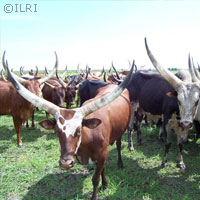
Urgent action is needed to conserve indigenous livestock breeds, according to the International Livestock Research Institute (ILRI). With farmers around the world increasingly turning to just a small number of farm animal breeds, more and more traditional breeds are at risk of extinction. The ILRI is calling on the international community to put in place a number of measures, such as the use of gene banks, to conserve these rare breeds, many of which are native to developing countries. 'Valuable breeds are disappearing at an alarming rate,' said Carlos Seré, Director General of the ILRI. 'In many cases we will not even know the true value of an existing breed until it's already gone. This is why we need to act now to conserve what's left by putting them in gene banks.' Farmers switch to more common breeds because they offer short term advantages in terms of yield. For example, Holstein-Friesian cows produce higher volumes of milk, and Large White pigs grow faster. However, these breeds are often poorly adapted to the more extreme environments of developing countries. During a recent drought in Uganda, the few farmers that had retained the local Ankole cattle were able to walk them long distances to water sources. In contrast many farmers who had given up the Ankole for imported breeds lost their entire stock. Yet despite their high level of adaptation to the local environment, the Ankole could become extinct within 20 years, scientists predict. The ILRI has drawn up four recommendations to save traditional breeds like the Ankole cattle. The first step is to 'keep genetic diversity on the hoof'. In other words, farmers need to be encouraged by market incentives and public policies to maintain genetic diversity on the farm. Secondly, greater livestock mobility across national borders should be encouraged. Ensuring a widespread distribution of rare breeds will make them less vulnerable to threats such as war, natural disaster and disease. The third recommendation calls for wider use of 'landscape genomics'. This approach involves using advanced genomic and geographical mapping techniques to predict which breeds are best suited to which environments and circumstances around the world. Dr Seré describes the fourth recommendation - gene banking - as 'long-term insurance'. 'In the US, Europe, China, India and South America, there are well-established gene banks actively preserving regional livestock diversity,' he said. 'Sadly, Africa has been left wanting and that absence is sorely felt right now because this is one of the regions with the richest remaining diversity and is likely to be a hotspot of breed losses in this century.' The ILRI is an international research institute which receives funding from a wide range of sources, including the EU.