


Save our statues! Scientists warn of climate change's impact on cultural heritage
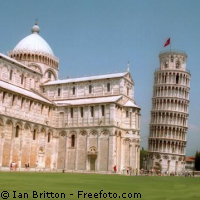
Scientists from the EU-funded Noah's Ark project have made an impassioned plea to policy makers to protect the world's cultural heritage from the impacts of climate change. The project, which ended earlier this year, found that the statues, buildings and monuments which make up our cultural heritage are likely to suffer increasing levels of damage as a result of climate change. Although the Noah's Ark team sent its results to the Intergovernmental Panel on Climate Change (IPCC), cultural heritage does not feature in the IPCC's latest series of reports. 'The fourth IPCC report doesn't consider cultural heritage at all and I think this is a scandal!' stated project coordinator Cristina Sabbioni of the Italian National Research Council. According to Professor Sabbioni, the enemies of cultural heritage are water (both precipitation and relative humidity), temperature, wind and pollution. The effects these have on the built environment include salt crystallisation, cracking, surface loss, biological attack, blackening, destruction or partial failure and flooding. The Noah's Ark project partners used climate models to predict how changes in temperature and rainfall patterns and other environmental factors such as pollutants could affect Europe's cultural heritage in the future. They then developed a Vulnerability Atlas and Guidelines to help stakeholders assess the likelihood of damage in their country or region and take steps to protect their historic buildings and collections. Presenting her project at the European Forum on Science Journalism in Barcelona, Spain, on 4 December, Professor Sabbioni explained how environmental factors affect different materials. Salt crystallisation occurs when relative humidity falls below 75.5%. It affects the attractiveness of the surface of monuments and also produces cracking. According to the Atlas, highly detailed gothic architecture carved in soft porous stone is particularly vulnerable to this phenomenon. As relative humidity levels in summer are predicted to decrease, the frequency of salt crystallisation will increase across Europe over the next century. Changes in temperature and rainfall patterns will have an influence on the biological organisms (lichens, algae and bacteria) growing on our monuments. These organisms have both an aesthetic impact (through changes in colour) and a structural impact (by disaggregating materials) on monuments. The project found that while central and northern Europe are set to see an increase in biological growth, southern Europe will see a decrease. Carbonate stones, such as marble and limestone, can be found in monuments across Europe, including the Coliseum, the Parthenon and Westminster Abbey. These stones are vulnerable to a process called surface recession, whereby rainfall literally washes the stone away. Central Europe, Norway and the northern UK and Spain are likely to be most vulnerable to this process in the future. Another threat to stone monuments, particularly those made of marble, is thermoclastism. Wide temperature fluctuations on a daily basis cause the expansion and contraction of the mineral grains which make up the stone, leading to the development of microcracking and exfoliation. The Atlas shows that the Mediterranean will continue to experience the highest level of risk of thermoclastism over the coming decades, and Central Europe will see its risk level increase. With the project over, Professor Sabbioni is determined to ensure its results are disseminated as widely as possible so that the curators of our cultural heritage can adapt their conservation strategies to take climate change into account. 'Cultural heritage is a non-renewable resource to be transmitted to future generations,' said Professor Sabbioni. 'If we want to save our roots we must protect it.' The Noah's Ark project is funded through the Sixth Framework Programme's 'Research for policy support' activity to the tune of ¿1.18 million.