


EU-project puts fish on the mobile
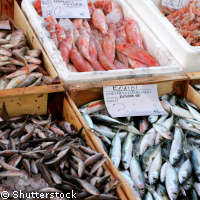
A mobile seafood guide is helping consumers to buy fish based on whether or not it has been caught in a sustainable way. The guide, which was developed as part of the EU-funded INCOFISH (Integrating multiple demands on coastal zones with emphasis on aquatic ecosystems and fisheries) project, combines information from 18 different seafood guides from the WWF, the Marine Conservation Society and others with size references for the entire fish or fillet. In accordance with a scientific assessment of the fish stock's general condition and the fishing grounds, the guide tells the consumer which fish can be eaten with a clear conscience. In this context, taking the size of the fish into consideration is important, as it indicates whether the specimen has reached sexual maturity and has thus had a chance to reproduce before being caught, ensuring the survival of the species. For instance, a conscientious consumer should not buy blue marlin or haddock, but can enjoy halibut caught off the US North Pacific coast. The roundnose grenadier, endemic to the North Atlantic, on the other hand, should only be bought if the fillets exceed 49 centimetres in length. The information is accessible online via computer or, more importantly, a web-enabled mobile phone, so that it is available anywhere at any time. In developing the tool, scientists have used mainly symbols, with few words, so that the guide will be widely understood. 'We want to enable consumers to contribute to sustainable use of the oceans,' says project coordinator Dr Rainer Froese of IFM-GEOMAR. 'If demand for overfished seafood species or fish that are too small falls, catching them is no longer worthwhile.' 'We hope that this instrument will be a help to anyone who wants to contribute actively to the protection of the oceans,' Dr Froese adds. Through various studies, the INCOFISH project is seeking to study and develop instruments for restoring healthy fish stocks and ecosystems by 2015. This is just one of the goals that was formulated by the World Summit for Sustainable Development. 36 partners from 23 countries all over the world are involved in the research. INCOFISH is supported by the EU's Sixth Framework Programme (FP6) with nearly €5 million from the 'International cooperation' theme.