


Erosion affecting state of Arctic coastlines
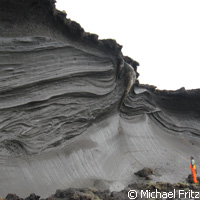
Climate change is playing havoc with the coastline in the Arctic region, intensifying erosion and retreats by 50 centimetres (cm) each year, a new international research study shows. This relentless action is affecting both the ecosystems in the region and the people who live there. The findings of the study are presented in the journal Estuaries and Coasts as well as in the 'State of the Arctic Coast 2010' report. The International Arctic Science Committee (IASC), along with the global joint project Land-Ocean Interactions in the Coastal Zone (LOICZ), the International Permafrost Association (IPA) and the Arctic Monitoring and Assessment Programme (AMAP) working group of the Arctic Council, initiated and coordinated the research study. A team of more than 30 experts from 10 countries participated in the research. Scientists from the Alfred Wegener Institute (AWI) for Polar and Marine Research at the Helmholtz Association and the Helmholtz Centre in Geesthacht in Germany contributed to the studies, which probed more than 100,000 kilometres (km) of the Arctic coasts. Based on the results, three seas that have sustained the biggest changes are the Laptev, East Siberian and Beaufort Seas. Annual coastal erosion rates could even top the eight-metre mark, according to the experts. The bottom line, say the researchers, is that coastal erosion could impact extensive areas of coasts in the future, particularly because around 33% of the world's coasts are found in the Arctic permafrost (frozen soft substrate). On the whole, Arctic coasts could be feeling the bigger brunt of the global warming headache because of the continuous decline of sea ice. Until recently, these areas had the support of enormous sea ice areas. But the threat is real and very near, especially as changes are emerging in areas that have been relatively stable for thousands of years. The team points out that 66% of the Arctic coasts consists of permafrost, and not rock. Erosion has a huge impact on these areas. And while the Arctic region is home to fewer rather than many people, the coasts in the far north are the hubs of both social and economic life. Human interest for the coastal regions of the Arctic is growing at a fast rate, particularly as demand for global energy resources is rising, and freight transport and tourism activities increase. From an ecological perspective, researchers predict that coast progressive erosion is going to take a toll on wild animal stocks that include caribou herds of the north and freshwater lakes. 'This international and interdisciplinary report documents in particular the interest and expertise of German scientists in the field of Arctic coastal research,' says Dr Volker of the IASC. For his part, lead author Dr Hugues Lantuit of AWI says: 'When systematic data acquisition began in 2000, detailed information was available for barely 0.5% of the Arctic coasts. After over 10 years of intensive work we have now gained a comprehensive overview of the state and risk of erosion in these areas.' LOICZ project office head Dr Hartwig Kremer says: 'The Arctic is developing more and more into a mirror of various drivers of global change and into a focal point of national and worldwide economic interest.'For more information, please visit: Alfred Wegener Institute (AWI) for Polar and Marine Research: http://www.awi.de/en/(opens in new window) Helmholtz Association of German Research Centres: http://www.helmholtz.de/en/(opens in new window) Estuaries and Coasts: http://www.springer.com/environment/journal/12237(opens in new window) State of the Arctic Coast 2010: http://www.arcticcoasts.org/(opens in new window)
Countries
Germany