


Small bypass vessels help cut mortality risk by 36%
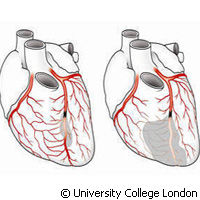
New international research shows that small bypass vessels are instrumental in cutting the mortality of patients diagnosed with coronary artery disease. Presented in the European Heart Journal, the results of the study provide insight into how these vessels, considered the 'back-up system' for the main arteries of the heart, are a key therapeutic target. Researchers from Germany, Switzerland, the United Kingdom and the United States investigated how natural bypass vessels, known as coronary collaterals, impact the lives of patients with blocked arteries. In the study, the team recorded a 36% reduction in mortality risk. Coronary collaterals are small yet specialised vessels of blood that connect the larger vessels in the heart. They are considered as the back-up system because they are essentially hidden until they kick-start into action. When activated, these small bypass vessels enlarge their diameters in order to carry significant blood flow and bypass blockages. Research into coronary collaterals has intensified in recent years. Experts used to believe that no links existed between the main coronary arteries. The methods most used to unblock patients' arteries are bypass surgery or stenting, an artificial 'tube' that is inserted into a natural passage in the body to prevent or counteract a localised flow constriction that is triggered by disease. Enter the researchers of this study who put the spotlight on coronary collaterals and their importance in the field of health. Collecting data from 12 studies and enrolling 6,529 patients for their investigation, the researchers compared patient survival rates in subjects with a high number of natural bypass vessels with those with minimal bypass vessels. According to the researchers, subjects who had a higher number of well developed vessels had a higher rate of survival compared to patients with either fewer or no such vessels. It should be noted that even though questions still exist on why some people have better bypass networks while others do not, the experts believe that genes and lifestyle factors play a key role. 'When we see patients with a heart attack (clotted coronary artery), the damage caused to the heart varies greatly from person to person,' explains lead author of the study Dr Pascal Meier at the Institute of Cardiovascular Science at University College London. 'One reason for this is because the 'back-up system' is better developed in some patients - but our study is the first to clearly show a difference in mortality. We found that whether patients underwent stenting to open their blocked artery or were treated with medications only, they had improved survival if their natural bypass vessels were better developed,' he adds. 'A growing body of research demonstrates that these vessels are protective and reduce mortality in patients with blocked coronary arteries. We should find means to promote these natural bypass vessels in order to improve outcomes for patients with heart disease.' Commenting on the findings, senior author Professor Christian Seiler of the University Hospital Bern, says: 'We know that regular physical activity can improve the natural bypass network. Recently, some small studies have examined possible ways of promoting natural bypass vessels, such as a treatment known as external counterpulsation (which imitates physical activity) and injections with a growth factor called G-CSF. Our study adds weight to the increasing evidence that we should be focusing more of our efforts on identifying how we can better develop natural bypass vessels.'For more information, please visit:University College London:http://www.ucl.ac.uk/European Heart Journal:http://eurheartj.oxfordjournals.org/
Countries
Switzerland, Germany, United Kingdom, United States