


Proteins working hard on secretion in cells, say researchers
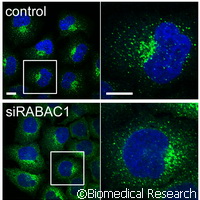
EU-funded scientists have discovered that 15% of the proteins encoded by the human genome contribute to the process of secretion in cells. Writing in the journal Nature Cell Biology, the team, from Germany and Ireland, reports that their findings are the results of a study of more than 8 million individual cells. Their work was supported by the MITOCHECK ('Regulation of mitosis by phosphorylation - A combined functional genomics, proteomics and chemical biology approach') project, which received EUR 8,578,177 of funding under the ' Life sciences, genomics and biotechnology for health' Thematic area of the EU's Sixth Framework Programme (FP6). 'This study is the first genome-wide assessment of the secretory process in a human cell system,' says study co-author Professor Jeremy Simpson, from University College Dublin (UCD) in Ireland. Scientists have long acknowledged that secretion is a process essential to almost all cell types in the body as it is used to deliver hormones into the blood stream, digestive enzymes into the gut and signalling molecules between cells. But to date they have not managed to successfully catalogue the complex pathway that a protein or lipid takes from manufacture to packaging and transporting through the cell to being secreted from the cell. 'Previous studies on the secretory process have either been carried out with a more narrow focus on specific subsets of genes or in more simplistic organisms such as the fruit fly (Drosophila) where many of the proteins identified have no human equivalent,' explains Professor Simpson. This new study changes all that. 'Now, using high content screening, we have been able to systematically target each of the 22,000 human genes and track the journey of a specific, fluorescently-tagged protein as it travels through, and out of, over 8 million individual cells,' continues Professor Simpson. 'In order for us to understand the impact on the body when this fundamental process of secretion is disrupted, we must first decipher the functional network of membrane trafficking pathways within the cell.' The team looked at over 700,000 microscopy images and found 554 proteins that influence secretion, with 143 of these either influencing the early stage of the secretory pathway or morphology of the Golgi - a cellular structure responsible for the packaging and labelling of proteins. Membrane traffic pathways connect membrane-bound organelles in a carefully ordered sequence that ensures the correct complement of proteins and lipids within the cell exists in order to maintain cellular balance or homeostasis. Newly synthesised proteins and lipids in the endoplasmic reticulum (ER) are modified as they pass along the secretory pathway through the Golgi apparatus to the cell surface. The MITOCHECK project ran from 2004 to 2009 and brought together scientists from Germany, France, Italy and the United Kingdom.For more information, please visit:UCD Conway Institute of Biomolecular & Biomedical Research:http://www.ucd.ie/~conway
Countries
Germany, Ireland