Disinfection robot system reduces infection spread in hospitals

Healthcare-associated infections pose a serious threat to patient health. Over 24 % of patients are fatally affected by healthcare-associated sepsis. Moreover, 52.3 % of patients treated in an intensive care unit die each year of the same cause. Deaths are increased two to threefold when infections are resistant to antimicrobials. According to health reports, next to the lack of hand hygiene, common vectors for swapping germs between patients and healthcare workers in hospitals are bed rails and mattresses.
Technology to reduce healthcare-associated infections
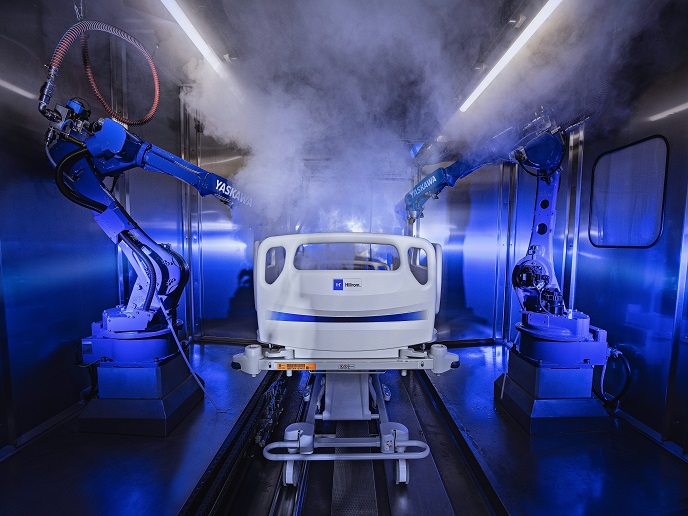
The EU-funded VDS project developed an automated washing system that uses steam and precision robotics to provide thermal cleaning and disinfection. Every few minutes, the system can deliver a fully disinfected hospital bed and mattress ready for immediate use. As all mattress handling is automated, there is no physical burden on staff, freeing up time and energy to focus on other aspects of patient care. “The mattress is lifted from the bed by a vacuum plate. A programmed robot cleans and disinfects the bed, while a specially developed washer uses steam to clean the mattress on every side and then compressed air to dry it,” explains Sander Hummeling, VDS coordinator and global sales director at Weber Hospital Systems(opens in new window). The system is placed 3 cm maximum from the surface to kill microorganisms. The minimum disinfection temperature is 85 degrees Celsius. Able to wash, disinfect and dry beds and mattresses all in one cycle, the VDS system meets all regulatory requirements set by new regulations on medical devices and is now available in the market. “We have officially validated that our disinfecting system demonstrates a 5 log reduction, meaning it can kill 99.999 % of the bacteria present on bed and mattress surfaces,” notes Hummeling.
A truly exciting state-of-the-art alternative
Uniquely, the VDS system does not require use of chemical cleaning agents. “Traditional machines use chemicals to clean and disinfect surfaces, which necessitate the use of high amounts of water. What’s more, high amounts of energy are needed to heat the water. The VDS system consumes only 6 litres of water and 4 kW of energy per bed and mattress compared to traditional machines consuming at least 60 litres and 9 kW, respectively,” remarks Hummeling. Complete independence from chemical cleaning agents circumvents a number of challenges. Over time, bacteria become resistant to them. Furthermore, chemicals can have health repercussions and limit bed and mattress lifespans. “Unlike several automated bed washing systems all relying on chemicals and water for cleaning, our solution is the only one suitable for processing high-end IPX4 beds equipped with advanced electronics like WiFi, scale and alarm functions,” adds Hummeling. The VDS system is ready for mass adoption by hospitals, providing patients with the cleanest beds and mattresses in the world. It helps create a new standard of cleanliness and contributes to reducing the number of infectious diseases. “For us, the VDS is just a first step in substantially reducing chemical use in hospitals. We are convinced that in due course we will be able to eliminate the use of chemicals in all washing and disinfection processes in hospitals. Our R&D department is now working on new machines that can disinfect any surface. Furthermore, we expect to break into new markets, such as the food industry,” concludes Hummeling.