Science takes on persistent and mobile organic pollutants, appropriately named ‘forever chemicals’


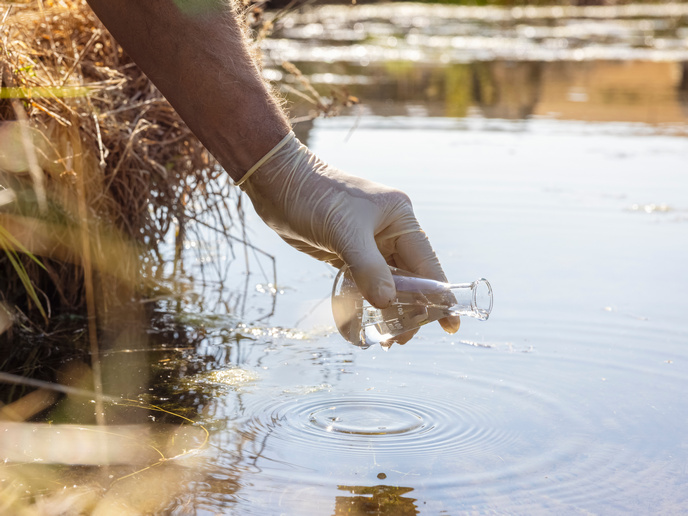
Europe’s circular economy action plan is one of the bases of the European Green Deal(opens in new window), but persistent, mobile and potentially toxic substances, PM(T)s, – particularly per- and polyfluoroalkyl substances (PFASs) – are challenging obstacles to achieving this goal. PFASs, known as ‘forever chemicals’, are found in industrial and consumer products such as paints, food packaging, firefighting foams and non-stick pans. These substances resist degradation and spread easily in soil, water and sediment systems. The EU-funded PROMISCES(opens in new window) project focused on identifying how these pollutants prevent circular economy deployment and on developing strategies to address these issues. An accessible overview of the project’s findings is available in the Layman’s Report(opens in new window). “Once PFASs enter the environment, they can remain for decades or even centuries, accumulating over time,” explains Julie Lions, a hydrogeologist at BRGM(opens in new window) and PROMISCES project coordinator. “Some of them are highly mobile in water systems, which means they can disperse far from their source, contaminating large water basins.”
Advancing PFAS detection
PROMISCES developed analytical capabilities to improve the measurements of these pollutants in various types of environmental samples. The researchers implemented 14 quantitative detection methods including 62 PFASs and 84 other industrial PM(T)s. Advancements included new methods to measure total organic fluorine in soil and sludge, helping estimate PFAS contamination. The team utilised cutting-edge technologies to identify unknown pollutants, as well as devices (passive samplers) that collect pollutants from water over time. Results show that detection of sensitivity varies depending on sample type. Although a test called ‘TOP assay’ helped characterise hidden PFASs and their precursors, there is no single reliable method able to measure all PFASs. “PFAS analysis faces major challenges. PROMISCES has therefore contributed to the need to develop ever more effective methods to meet the growing demands of environmental monitoring,” says Lions. The project contributed to setting European standards on PFASs, developing recommendations for implementing EU directives(opens in new window) and working with expert groups linked to the Drinking Water Directive(opens in new window).
Understanding health risks
Beyond traditional chemical analysis, the project used non-animal tests to evaluate 15 health effects of PFASs and industrial PM(T)s. “The most prominent impacts observed were receptor-binding effects on the thyroid hormone system,” Lions notes. “This was somewhat unexpected, as existing PFAS research has mainly focused on liver toxicity, reproductive issues or immunotoxicity.” PROMISCES developed computational models to predict the toxicity and environmental behaviour of 71 PFASs. These tools are available and can can be accessed by the broader research community through a web application.
Technologies for a cleaner future
The project developed multiple technologies to remove PFASs and industrial PM(T)s, tested under real-life conditions across seven European case studies(opens in new window). The innovations address contamination in diverse environments, from drinking water in Germany to contaminated sediments in Italy. One promising advancement is ultrasonic cavitation technology, which uses high-frequency sound waves to generate microscopic bubbles that collapse and break carbon-fluorine bonds in PFAS molecules. “We demonstrated efficiency up to 95 % for PFAS destruction in contaminated waters. This technology has the advantage of not requiring chemical additives,” Lions remarks. High-temperature heating (pyrolysis) at 600 ºC effectively removed PFASs from soils and sediments. Other promising methods include in-situ soil flushing using non-Newtonian fluids, which can wash PFASs out of soil with up to 80 % efficiency, and plasma treatment, which achieved 40 % to over 90 % removal of long-chain PFASs. For short-chain PFASs, stable removal from organic-rich groundwater was achieved using a combined approach of activated carbon filtration and ion exchange. Additionally, PROMISCES delivered critical policy recommendations, emphasising the need for harmonised regulations, improved monitoring and science-based risk assessment. Another output is the decision support framework(opens in new window), which helps stakeholders manage PM(T)s in circular economy contexts through enhanced substance data availability and interoperability. Work has continued since the PROMISCES project concluded in April 2025, with three project partners (COLAS, BRGM and IPGP) applying for a patent for PFAS remediation. “This process can be used to decontaminate soil, groundwater and industrial facilities, and has already been deployed on several fire safety system clean-up sites,” says Lions.