Integrated approaches to tackling food waste

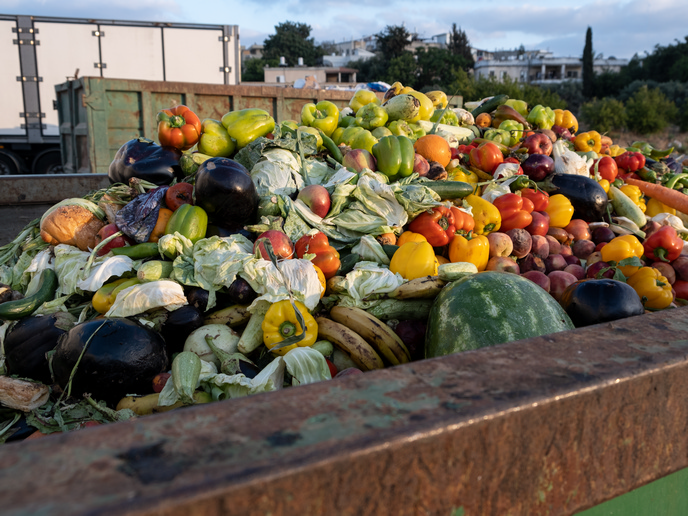
A third of all food produced globally is lost or wasted according to the Food and Agriculture Organization of the United Nations (FAO)(opens in new window), despite rising food insecurity. This wastage occurs at every stage of the supply chain, from production through to consumption. “This situation is driven by fragmented systems, a lack of data, misaligned incentives and limited coordination between actors,” explains ZeroW(opens in new window) project manager Anna George from Innovation Commercial Pathways(opens in new window) in Ireland. “Isolated solutions are not sufficient. Instead, the challenge requires coordinated, system-level change that addresses technical, behavioural, economic and policy dimensions across the entire food supply chain.” This is what the EU-funded ZeroW project set out to achieve. Rather than focusing on one single solution, the project combined multiple types of innovation covering process, organisation, technology and governance. “These were designed as integrated ‘innovation packages’ tailored to real food chains,” says George. “The aim was not only to reduce waste, but to transform how food systems operate, making them more efficient, resilient and sustainable.”
Systemic Innovation Living Labs
Collaboration took place through nine Systemic Innovation Living Labs(opens in new window) (SILLs), where solutions were co-created and tested in real-life conditions. These included data-driven approaches to monitoring and assessing food waste along the supply chain, from local farmers to supermarkets. A sustainable packaging for oily fish made from compostable materials was also developed, along with vision-based software to ensure efficient production of greenhouse tomatoes and AI-based demand forecasting. Other SILLs focused on data-driven production process control, efficient food bank networks, and consumer communication. “These Living Labs allowed continuous feedback between stakeholders,” says George. “This ensured that innovations were practical, adaptable and aligned with market and policy needs. The approach emphasised collective learning and iterative development, rather than fixed, top-down implementation.”
Applying technical, economic and environmental indicators
Innovations were piloted in operational environments across different stages of the food chain, from pre-harvest to consumption. Performance was assessed through a combination of technical, economic and environmental indicators, including reductions in food waste, greenhouse gas emissions and improvements in system efficiency. “Several key lessons emerged,” notes George. “First, reducing food waste requires strong collaboration across the supply chain, as actions by one actor often depend on others. Second, flexibility is essential. Solutions need to be adapted to local contexts, market conditions and regulatory frameworks.” George notes as well that behavioural and organisational changes are just as important as technological ones, and that early consideration of scalability and sustainability is critical to ensuring that innovations can move beyond pilot stage.
Blueprint for transforming food systems
Looking ahead, George believes that the immediate focus should be on scaling and replication. “ZeroW has developed regional scaling strategies, business models and policy recommendations to support wider uptake of its solutions,” she remarks. “The project also outlines pathways to scale results towards the EU’s 2030 food waste reduction targets and beyond.” Over the longer term, ZeroW aims to contribute to a transition towards near-zero food waste by 2050. “The project’s legacy will be not only in the individual solutions developed, but in demonstrating how systemic, collaborative approaches can address complex sustainability challenges,” adds George. “By showing how innovations can be co-created, tested and scaled in real-world settings, the project provides a practical blueprint for transforming food systems across Europe and beyond.”