Prioritising integrated, vulnerability-focused urban greening

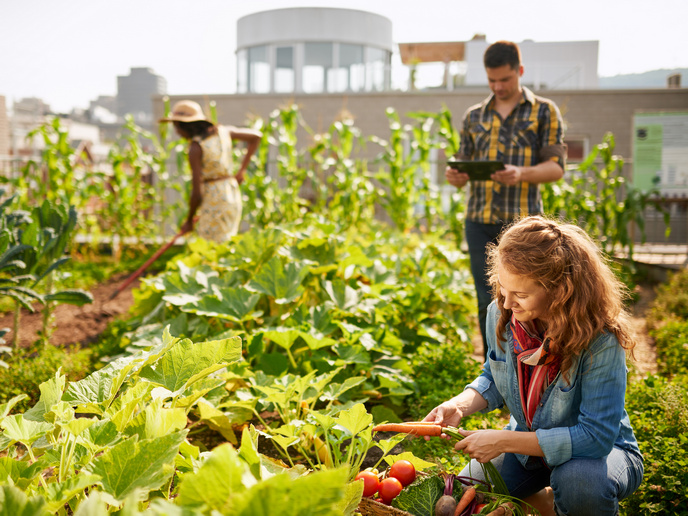
There is growing awareness that green infrastructure (GI) brings numerous benefits to cities. These include helping to mitigate high temperatures, creating local food production opportunities and boosting overall citizen well-being. Examples of greening include greenhouses on rooftops, tree planting along streets, and general park space. “Air temperatures are on average 1.3 degrees higher(opens in new window) in streets with sparser trees compared to streets with fuller trees,” notes URBAG(opens in new window) project coordinator Gara Villalba from the Autonomous University of Barcelona(opens in new window) (UAB).
Assessing implementation of green infrastructure
Building on such findings, the EU-funded URBAG project was launched to identify effective ways of implementing GI to ensure urban sustainability. It also sought to address the lack of integrated assessment, and a need for more systemic evaluation. The project used a range of multidisciplinary methods and tools to assess the implementation of measures such as green corridors and urban agriculture in Barcelona and Oslo. These tools included frameworks to assess urban hydrological risks, the net benefits of GI, and the capacity of certain measures to address specific local vulnerabilities (e.g. heat stress and air pollution). Life-cycle assessments were used to assess environmental impacts associated with resource consumption and flows (e.g. water, energy, materials, fertiliser production) across the full life cycle of urban agriculture. New decision-making approaches were also assessed. “This was crucial for planning efforts like the green roof scenarios in Oslo,” says Villalba. Extensive computational modelling, including atmospheric and climate modelling, weather research and forecasting and building energy modelling to name but a few, was also carried out.
Systemic, integrated and vulnerability-focused
A key finding of the project, which was supported by the European Research Council(opens in new window), was that GI implementation needs to be systemic, integrated and vulnerability-focused. “Our research demonstrated that maximising the expansion of GI is not always effective,” adds Villalba. “Solutions must be optimised to maximise desired impacts, while minimising unintended negative consequences.” For this, integrated planning is essential, and trade-offs must be carefully managed. While GI can reduce local vulnerabilities such as heat exposure or lack of recreational space, it can simultaneously increase vulnerabilities, such as increased water requirements or greenhouse gas emissions from maintenance and fertiliser usage. The research also supported prioritising GI implementation in high-vulnerability areas (socially disadvantaged and climate-exposed) rather than uniform city-wide expansion. Stakeholder input, obtained through participatory processes, is essential for weighting these vulnerabilities to design the most effective and equitable solutions.
Coordination between researchers and urban planners
URBAG has provided actionable guidance for planners. Recommendations for policy, urban planning and research have been published(opens in new window), alongside numerous articles and reports. “Next steps include refining methodologies, addressing computational challenges, ensuring the long-term viability of GI, and translating research into widespread policy practice,” remarks Villalba. “One of the biggest barriers identified was high computational cost and spatial resolution limitations of urban air quality modelling. Future research should integrate micro- and regional-scale modelling to accurately evaluate the effects of changing urban land use on air quality at a much finer scale.” Villalba and her team would also like to see continued collaboration between researchers, urban planners and policymakers. The related proof of concept NUTRISOIL project highlights the importance of fostering dialogue and collaboration across sectors to link organic waste management with sustainable food production and circular urban systems. “I will be proposing a second proof of concept project for a plant to provide peri-urban farmers with biomass waste resulting from park maintenance,” says Villalba.