



Using living organisms as natural biosensors

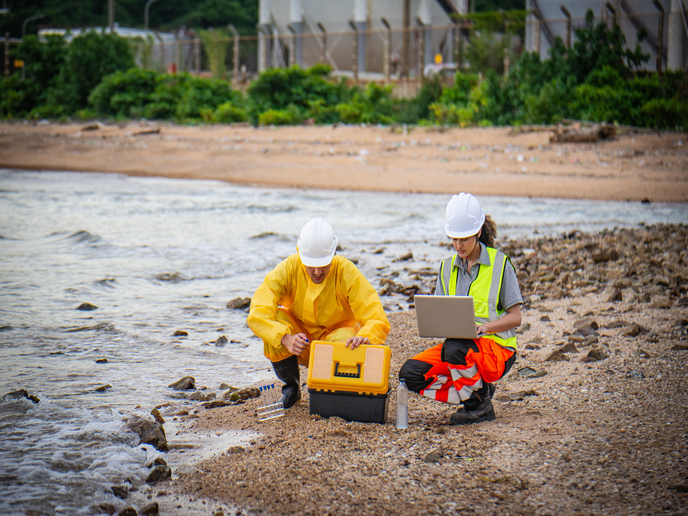
Assessing the state of aquatic environments usually involves gathering data through sensors or analysing samples back in the lab. While these traditional methods provide precise and easily quantifiable information – such as heavy metal concentrations, chlorophyll levels or the presence of pesticides – they can be costly and time-consuming. This limits their suitability for long-term monitoring programmes.
Biohybrid systems and biomonitoring approaches
The EU-funded Robocoenosis(opens in new window) project sought to address this by using living organisms, such as mussels or water fleas, as natural sensors. The aim was to incorporate these organisms into devices that could detect environmental changes and provide continuous, real-time monitoring. “In contrast to periodic chemical analyses, we thought that biomonitoring with living organisms could provide a more integrated assessment of water quality,” explains Robocoenosis project member Wiktoria Rajewicz from the University of Graz(opens in new window) in Austria. “This is because organisms respond to the combined influence of multiple environmental factors rather than to isolated parameters.” The project team set out to develop biohybrid systems that build on and enhance existing biomonitoring approaches. “A project of this magnitude involves trial and error, and we developed many different prototypes,” says Rajewicz. “We combined new developments in engineering, biology, robotics, and often employed out-of-the-box thinking approaches.” The team began by identifying organisms whose behaviour could be analysed, classified and linked to external influences. Integrated prototypes were then developed to capture and record data, and improved from there. These biohybrid devices were tested in various freshwater environments and often conducted at night to better observe planktonic organisms that are attracted to light.
Accurate monitoring of freshwater basins
These experiments helped to demonstrate that biohybrid robots could indeed provide a new, affordable way to monitor freshwater basins. “The combination of state-of-the-art components and the ability to monitor water directly at source are key results,” says Rajewicz. “This method bypasses the need for maintaining laboratory conditions and offers a robust early-warning sensing system.” The team was able to show that by utilising and refining animal-based sensors, speedy and accurate analyses of environmental data could be achieved. “The robustness of these systems lies in the additional layer of analysis we conduct with the raw data,” notes Rajewicz. “In addition to obtaining environmental information, we also get an insight into the net effect of the environment on living organisms.”
Aquaculture, sensor and robotics industries
Next steps involve bringing the developed technologies to the market and exploring commercial possibilities. “This will allow for the wider public to benefit from our findings and potentially contribute to reporting activities and environmental monitoring missions,” remarks Rajewicz. Indeed, the Robocoenosis team believes there are numerous industries where this technology could be valuable. These include inland and marine aquaculture, as well as the sensor and robotics industries. Authorities responsible for the safety and security of water basins, as well as marine and freshwater researchers might also find these devices useful. “Implementing this measuring system could bring benefits to long-term monitoring missions of protected habitats, where human activity needs to be limited,” adds Rajewicz. The good news is that the advances achieved in Robocoenosis will now be continued in a follow-up EU-funded project entitled BioDiMoBot. The project will further refine user-friendly robotic tools to provide in-depth insights into ecological health.