Building a European research infrastructure for plant genetic resources

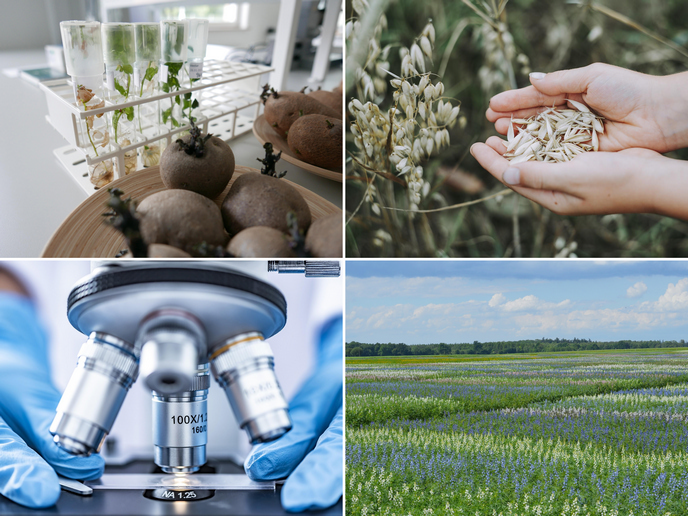
To feed a growing population, agriculture has increasingly relied on a limited number of crop varieties that perform well under controlled conditions. As a result, many traditional varieties and wild relatives have disappeared from fields, along with genetic traits that once helped plants cope with adversity. Europe’s ability to respond to climate change, food insecurity and biodiversity loss depends in part on how well it understands, conserves and uses its plant biodiversity. The EU-funded PRO-GRACE(opens in new window) project has laid the foundations for a coordinated, distributed European research infrastructure for plant genetic resources, addressing long-standing fragmentation and lack of standardisation in processes and procedures.
Genetic diversity, climate resilience
The focus on a narrow range of high-yielding plant varieties has boosted productivity but sharply reduced genetic diversity, leaving crops increasingly vulnerable. “A single new pathogen or a rapid change in temperature can threaten entire harvests because genetically uniform crops tend to respond in the same way to stress, making them simultaneously susceptible,” explains Giuseppe Aprea of the Italian National Agency for New Technologies, Energy and Sustainable Economic Development(opens in new window), project coordinator. To address this, plant breeders and scientists need information on traits that could help crops adapt. Repositories of accessions – unique, identifiable samples of plant material – are an essential tool. The European Search Catalogue for Plant Genetic Resources(opens in new window) (EURISCO) currently documents more than two million accessions, yet this is only a fraction of those housed in the approximately 400 European gene banks and institutions. Furthermore, in situ (field-based) accessions remain largely undocumented.
Coordinated infrastructure of European plant genetic resources
PRO-GRACE laid the foundations for a distributed research infrastructure linking existing gene banks, conservation centres and research institutes. To date, there are more than 30 member facilities in 17 European countries. Countries will retain ownership and expertise of national nodes while operating within a shared European framework coordinated by a central hub. The members of the European research infrastructure will agree on shared standards for accessions’ descriptions, documentation and materials’ requests. Furthermore, “for in situ resources, such as crop wild relatives and traditional varieties still grown on farms, the infrastructure will support monitoring, documentation and backup in ex situ facilities, helping prevent biodiversity loss that is currently poorly recorded and often a risk,” notes Aprea.
Standardised protocols, FAIR data management
Harmonised protocols are a prerequisite for reliable comparison, quality assurance and safe exchange of material. PRO-GRACE developed quality standards for collecting, regenerating and storing plant material, and it laid the foundations to align with procedures governing the exchange of genetic resources across Europe and internationally. The proposed infrastructure will also improve data organisation and sharing by applying FAIR data principles, ensuring information is findable, accessible, interoperable and reusable. This will enable researchers and breeders to locate relevant material more easily and compare traits across collections with confidence. As Aprea notes: “Standardisation is a key step in turning Europe’s diverse collections into a coherent and trustworthy system.” PRO-GRACE delivered a feasibility assessment and proof of concept showing how such an infrastructure could operate. Building on this momentum, the newly established GRACE-RI consortium is now preparing a roadmap application for the European Strategy Forum on Research Infrastructures. “Bridging conservation and application, the research infrastructure will preserve Europe’s plant agrobiodiversity while positioning plant genetic resources as a cornerstone of Europe’s response to climate change, food security and sustainable development,” concludes Aprea.