Understanding how pathogens infect crops

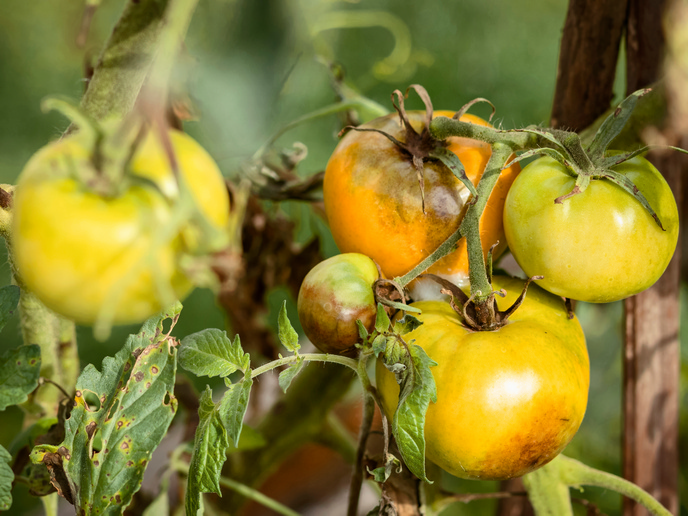
In the mid 19th century, a pathogen called Phytophthora infestans caused potato blight, a disease that led to famine in Ireland, significantly impacted food supplies, and resulted in millions of deaths around the world. But such incidents aren’t confined to the realms of history. In fact, with climate change, major crops face an increasing threat of disease, with an estimated 25 % of crops already being lost to infections each year. Not wanting history to repeat itself, researchers around the world are working to better understand how pathogens infect crops. One of those initiatives is the EU-funded PathEVome(opens in new window) project. “We know that Phytophthora delivers virulence proteins into plant cells to suppress host immunity and cause disease,” says Paul Birch, a professor of Plant Sciences at the University of Dundee, who served as the project coordinator. “What we don’t entirely understand is how.” Using state-of-the-art molecular cell biology, the European Research Council(opens in new window) supported project followed the routes by which virulence proteins are secreted by pathogens such as Phytophthora and how they are taken into plant cells. “If we can understand the delivery mechanisms, we can look for, or design, methods to stop virulence protein delivery,” adds Birch. Virulence proteins are specialised molecules produced by pathogens (such as bacteria, viruses, oomycetes and fungi) that allow them to infect hosts, evade immune defences and cause disease.
Four discoveries on how pathogens infect plants
During the project, researchers made four major discoveries. First, they found that the Phytophthora virulence proteins delivered into plant cells are secreted by an unconventional exit pathway that bypasses Golgi, where proteins are typically modified, sorted and packaged for transport to their destination. Researchers further found that to do this, virulence proteins are processed by proteases, which allows them to be sent into the unconventional secretion pathway. The project also discovered that virulence proteins are packaged into extracellular vesicles for delivery between pathogen and plant cells, and that they are taken into plant cells by endocytosis. “Because each of these discoveries is generally applicable, especially to fungal and oomycete pathogens of plants, they could lead to new ways of preventing infection,” concludes Birch. To help turn that potential into reality, researchers are now studying methods for stopping the pathway pathogens use to deliver virulence proteins, disrupting the functioning of proteases, and blocking the route used to enter a plant’s cells. Five of the project’s early-career researchers are already working to answer such questions, with two having established their own dedicated research groups.