Dental implants with antimicrobial intelligence

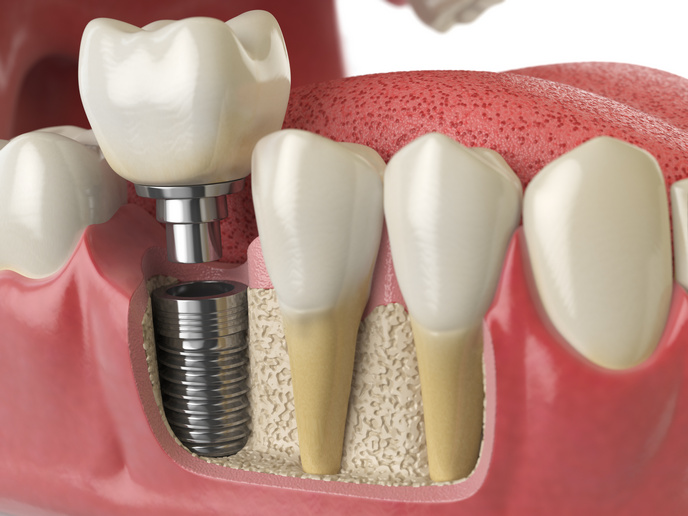
Peri-implantitis(opens in new window) remains one of the most serious complications in modern dentistry, affecting up to 43 % of dental implants worldwide. It develops when microorganisms accumulate on implant surfaces and form pathogenic biofilms (plaque). Bacteria migrate across teeth and implants, triggering chronic inflammation and bone destruction around implants. Patients with uncontrolled diabetes, heavy smokers and immunosuppressed individuals are particularly vulnerable. Despite advances in implantology, clinicians still lack reliable tools to prevent infection, monitor early tissue changes and ensure long-term stability.
Implants with antimicrobial intelligence
The EU-funded I-SMarD(opens in new window) project aims to address this issue by developing a new generation of multifunctional dental implants designed to simultaneously address infection, healing and long-term monitoring. “A critical factor in peri-implantitis is the geometry, structure and surface morphology of the implant itself,” highlights project coordinator Animesh Jha. The surface geometry and morphology of current implants favour bacterial adhesion, while acidic conditions in the oral cavity may induce corrosion and release metal ions, contributing to adverse tissue reactions. Although antibiotic-coated implants have emerged, their pharmacokinetics remain poorly characterised and raise concerns about antimicrobial resistance. I-SMarD utilised titanium implants coated with inorganic-based photoactive antimicrobial minerals that can release ions in a controlled manner to suppress infection. For more aggressive infections, the coating can also be blended with antibiotics for controlled release. Moreover, the coating is mechanically robust under mastication stress and can promote mineral formation and healing. It is integrated into a 3D printing method and can be applied on the surface of any type of implant.
Technological advances
To optimise implant performance, the consortium combined advanced computational modelling with experimental validation. Simulations(opens in new window) were used to predict the biomechanical behaviour and longevity of the generated structures. The goal was to design implants with improved load distribution and enhanced osseointegration potential. The manufacturing parameters were carefully refined to ensure reproducibility, mechanical competence and cost-effectiveness. In parallel, the team incorporated pH-responsive polymers and functional nanomaterials to further enhance antibacterial activity and support osteogenic differentiation. Biological evaluation confirmed biocompatibility, while in vitro and in vivo studies provided encouraging evidence of antibacterial efficacy and tissue regeneration potential. A distinctive feature of the I-SMarD implants is a patented photoactive coating that enables infection detection. It uses a microfluidic device(opens in new window) capable of analysing and identifying bacterial strains. This offers clinicians the potential to manage infection, monitor healing and ensure implant quality.
Impact and clinical translation
Beyond technical development, the project has fostered close collaboration between manufacturers, engineers and materials scientists. An end user committee comprising clinicians, manufacturers and patients has contributed to design and translation strategies. The next steps include building a database for infection monitoring in bone and dental tissue and advancing regulatory compliance and commercialisation. In addition, detailed techno-economic analysis confirmed the feasibility of large-scale production using optimised 3D printing and coating processes. By integrating advanced manufacturing, nanomaterials, photoactive antimicrobial coatings and real-time diagnostic capability, I-SMarD moves beyond conventional implants. If successfully translated into clinical practice, these smart implants could significantly reduce peri-implantitis, shorten healing times, and lower rehabilitation costs for patients and healthcare systems.