Printing implants from living cells to prevent osteoarthritis


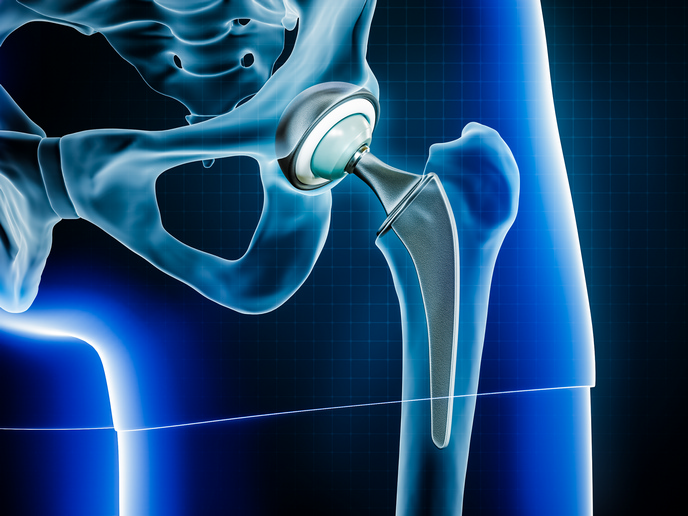
Osteoarthritis (OA) is a degenerative disease of the joints that affects both connective tissue and the underlying bone. Although generally associated with an ageing population, OA can also be induced in young patients, for example through serious sports injuries or other causes of high-impact trauma. “Deep osteochondral defects (issues affecting both articular cartilage and bone) can trigger OA at a young age,” explains JOINTPROMISE(opens in new window) project coordinator Ioannis Papantoniou(opens in new window) from KU Leuven in Belgium. “Once OA is triggered, it can’t be reversed. This can lead to knee replacement surgeries relatively young, often between the ages of 40 and 50.” A key challenge is that current synthetic implants have a maximum lifespan of 15 years – and once they wear out, they need to be replaced. “During that time a patient’s bone might have further degenerated, which means you can’t simply replace like for like,” says Papantoniou. “The process is way more complex.” OA can therefore lead to lifelong mobility challenges, with significant costs for the individual and society as whole.
Synchronising bone and cartilage regeneration
The JOINTPROMISE project sought to address this challenge by developing joint implants capable of synchronising the regeneration of cartilage and the underlying bone. By addressing the underlying injury, young patients would have a better chance of recovery, avoiding OA. The project pioneered new developments in organoid technology – miniaturised and simplified versions of human organs grown in vitro from stem cells. “The organoids we developed are basically preprogrammed building blocks used for engineering these implants,” notes Papantoniou. “Once implanted, they know how to drive the regenerative processes needed.” Another key element of the project involved bioprinting. ‘Bio-inks’ – a mixture of living cells and biomaterials – were used to print 3D, functional tissue structures.
Streamlined, automated bioreactor process
The next challenge for the project was how thousands or even millions of these organoids could be produced at scale. “For this, we built a mini factory with our partners, installed currently at KU Leuven,” adds Papantoniou. “This streamlined, automated bioreactor and bioprinter process takes single cells, transforms them into organoids, and then bioprints them into larger implants while enabling digitalisation of these currently manual processes.” The mini factory was trialled and validated during the project. Implant feasibility and efficacy were studied in animal models; the next step will be to carry out human clinical trials. “The platform at KU Leuven has been further developed and validated post-project,” says Papantoniou. “This is an important step towards producing living implants in a supervised, controlled and automated environment, with minimal manual intervention during manufacturing.”
Benefits of biotech-based implants
Once brought into clinical settings, these biotech-based implants could see significant improvements in the quality of life of patients, through the regeneration of subchondral bone and articular cartilage and the avoidance of OA. This in turn will place less burden on healthcare providers. Papantoniou also sees the innovation as having huge potential across a range of situations, not just for young people suffering sports injuries. Conflict zones where citizens are at risk of injury for example are a case in point. The technology developed to create bioimplants at scale could also have other uses. “Our applications were for joints, but the robotic platform we built containing the bioreactor and bioprinting could also be used to produce kidney or cardiac organoids,” remarks Papantoniou. “There is potential to make different types of tissue implants for a diverse range of patients.”