


A data-driven tool for aquaculture hatchery decision-making


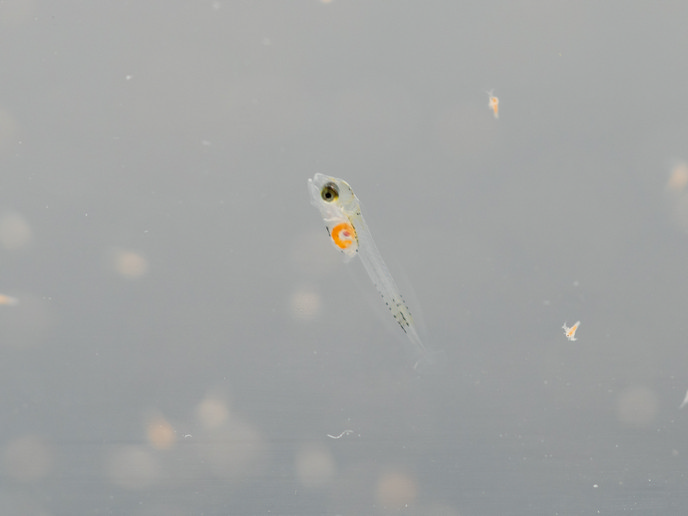
HATCHTOOLS was born from the need to bring structure, automation and intelligence to hatchery research and operations, aiming to help teams manage, analyse and learn from their data in a more efficient and reliable way.
Filipe Soares, HATCHTOOLS project coordinator
Research and development in aquaculture, especially in hatchery operations and larval nutrition, must handle large volumes of complex data. Feed formulations, water parameters, growth rates and other key performance indicators are often managed manually with spreadsheets or handwritten logs, making data management a long and difficult process. With funding from Horizon Europe(opens in new window), ANI(opens in new window) and Innovate UK (UKRI)(opens in new window) deployed under the European Partnership on Innovative SMEs, a consortium of three aquaculture enterprises – SPAROS, FLATLANTIC and Otter Ferry Seafish – designed a solution to this challenge through the HATCHTOOLS(opens in new window) project. “HATCHTOOLS was born from the need to bring structure, automation and intelligence to hatchery research and operations, aiming to help teams manage, analyse and learn from their data in a more efficient and reliable way,” explains Filipe Soares, HATCHTOOLS project coordinator. The project developed a web-based data management and analytics platform to help generate insights specifically from larval nutrition and hatchery studies. This makes the tool different from most feeding and management systems, which usually focus on daily operations and production control. Drawing on data from several sources such as feeding logs, water quality records and zootechnical measurements, the platform uses automated statistical algorithms to analyse the information and generate reports instantly. “It enables users to focus on interpreting results rather than spending their often limited time processing data and compiling outputs,” says Soares. HATCHTOOLS offers an intuitive interface that hides complex statistical algorithms. At the same time, it securely stores data and facilitates collaboration among team members.
Validating the tool in commercial hatcheries
The Portuguese company SPAROS(opens in new window) focused on science and technology for the aquaculture market, spearheading the project in partnership with two fish producers: FLATLANTIC(opens in new window) and Otter Ferry Seafish(opens in new window). While SPAROS developed the software, both fish producers contributed with hatchery data, provided testing environments and validated the tool in real production conditions. Tests were conducted with the fish species: turbot, Senegalese sole and Atlantic halibut(opens in new window). “The trials ended up showing very promising results in new feed formulations specifically tailored for Atlantic halibut larvae, leading to higher growth rates and improved feed conversion,” states Soares. These results showed that the platform can streamline data management and trial workflows, supporting the development of more effective feeding strategies for sustainable aquaculture. Soares explains that ensuring robust, healthy fish larvae from the very first stages is important for reducing losses, optimising resource use and producing more resilient stocks throughout the entire farming cycle.
From early adoption to advanced analytics
Early users of HATCHTOOLS report that it helps simplify data organisation and reporting, reducing the time needed to complete these tasks. They highlight two key features: the ability to automatically generate trial reports and the tool’s statistical algorithms, which support consistent results across trials, even when multiple people or different organisations are involved. In the coming years, HATCHTOOLS is expected to evolve into a more comprehensive decision-support system for hatcheries and aquaculture researchers. Future developments will be guided by user needs and the potential applications of the data they collect. Planned features include advanced data visualisation dashboards and machine learning models to perform more sophisticated analyses, particularly for molecular-level data such as gene expression. The consortium brought together SPAROS, FLATLANTIC and Otter Ferry Seafish, co-funded by the EU through Horizon Europe, the Portuguese Innovation Agency (ANI) and the UK’s Innovation Agency (Innovate UK).