A leap forward in using sediment cores to understand ancient ecosystems

Innovative techniques developed to analyse ancient plant DNA in sediment cores from lakes in the Arctic region and elsewhere on the European continent shed new light on how ecosystems change through time. “Sediment cores are the ‘archives’ of ecosystem change,” explains IceAGenT project coordinator Inger Greve Alsos, professor in Biology at the University of Tromsø - The Arctic University of Norway(opens in new window) (UiT). “We have the same type of data from many different sites, so we can sort a general pattern from a site-specific pattern,” she says. “We deepened our understanding of how long it takes for ecosystems to establish and which factors cause them to change through time.” It takes millennia rather than decades or centuries – far longer than previously thought – for stable and resilient ecosystems to establish, she notes, though finding cores that go far back in time is challenging. “We have 50 to 60 cores that cover more or less the full Holocene. We have many more that cover part of it, and a few that go further back in time.”
Understanding plant-animal interaction
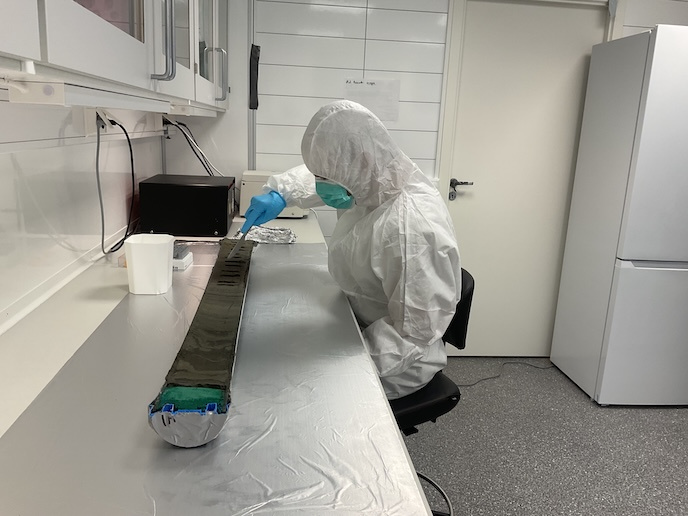
Sediment layers in the core are 14C carbon-dated. DNA is then extracted in the lab. The team improved DNA metabarcoding(opens in new window) methods to increase detection of both mammals and plants in the same core sample. Species are identified using DNA sequencing reference libraries, such as PhyloNorway(opens in new window) at UiT. Previously, researchers could trace plant changes through pollen analysis and animal populations using bone records. “Now we are more able to understand the interaction between plant and animal, and how that changed with climate and human impact. That was never possible before,” Alsos explains. The team devised an innovative DNA blocker system to reduce human DNA ‘noise’ that can distort mammalian DNA analysis. It was used to detect past plant-animal interactions. “In northern Fennoscandia, we find that the animals arrived after the big change in vegetation, so they didn’t cause it,” Alsos adds. This was not known before. In contrast, they found that in the Alps, the introduction of cattle had a major effect on plant diversity.
Plant migration patterns
The time-saving, cost-effective metabarcoding provided detailed data on how plants responded to past climate changes. For example, samples from 10 sites in the northern Fennoscandia region showed the arrival of plants and animals after the early Holocene melting of the Scandinavian ice sheet 8 000 to 11 000 years ago. Species migration patterns were more complex than simple climate-driven movement from south to north. Plant species arrivals were also affected by competition with existing plants and barriers to dispersal, according to Alsos. Some plants currently found at the highest alpine elevations only arrived during the Holocene, not the Late Glacial period. This suggests much slower dispersal than previously thought. “I was surprised to see that some plants that are adapted to cold conditions didn’t arrive until many thousands of years later than expected,” says Alsos. The metabarcoding multiplexing method enabled analysis beyond the species level to determine plant dispersal routes. “We found that northern Fennoscandia was colonised repeatedly from different source populations, so post-glacial dispersal routes are more complex than we knew,” notes Alsos.
Sophisticated ecosystem model
A sophisticated model was developed. It went beyond traditional climate-based models by incorporating data on species interactions, herbivores and competition, alongside climate variables, to predict future ecosystem responses to climate change. Similar work is under way in the EU-funded MEMELAND project at UiT which looks at the ecological footprint through time. The IceAGenT project was funded by the European Research Council(opens in new window).