How rare-earth-free magnets power scooters and pumps

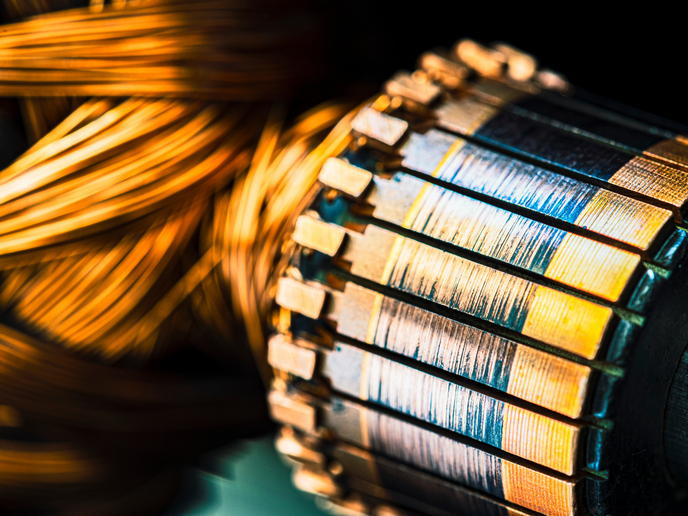
Permanent magnets sit inside electric motors, turning electricity into motion in everything: from scooters to water pumps. Today, many high-performance magnets rely on rare-earth elements, leaving European manufacturers exposed to supply risks and environmental impacts associated with mining and long supply chains. The EU-funded PASSENGER(opens in new window) project developed and piloted rare-earth-free permanent magnets based on more widely available materials in Europe, then tested their performance in real applications. The goal is to develop practical replacements that meet the requirements of as many products as possible, even if redesign is necessary.
Rare-earth-free magnets proven in scooters and water pumps
PASSENGER’s improved ferrite powders were evaluated in electromobility, starting with an e-scooter motor redesign. Rodolfo Miranda, PASSENGER’s project coordinator, says, “In the case of the e-scooter, although the motor design differs from that of a conventional Nd-Fe-B motor, the latest ferrite powder developed within PASSENGER (Ferrite P61) achieved comparable efficiency.” He adds that the remaining gap is torque at low rotational speeds, where Nd-Fe-B magnets still benefit from higher magnetic flux density. A second demonstrator moved from prototypes to an off-the-shelf product. Miranda explains, “For water pumps, we successfully demonstrated the replacement of Nd-Fe-B magnets in a commercial product (Para 15-130/4-20/SC | Wilo).” Because ferrite delivers lower magnetic flux density than bonded Nd-Fe-B, PASSENGER adapted magnet dimensions so that larger magnets could meet the same functional requirements in the pump.
Scaling production in established European facilities
The project’s pilots covered key parts of the value chain, from powders to bonded magnets and rotor prototypes. During the work, partners produced 160 kg of MnAlC and 4 tonnes of improved strontium ferrite, including Europe’s first industrial MnAlC production run. Industrial partners operated existing manufacturing facilities, so powder and compound production did not become the limiting step. Instead, progress depended on application testing and the steps required before a component could be accepted into an end product, including customer homologation and integration into a motor design. PASSENGER also addressed practical questions that affect deployment. Some plans to study cold-weather demagnetisation in depth could not be completed due to technical difficulties, which helps set priorities for follow-on work where winter performance is critical.
Lower-impact supply chains and practical recycling routes
PASSENGER’s life-cycle assessment pointed to supply-chain drivers as the biggest environmental advantage. Davies notes, “In short, the biggest environmental gain comes from avoiding rare-earth mining and creating a shorter European-based value chain.” The same focus on practicality guided recyclability plans. For bonded ferrite magnets, end-of-life parts and production scrap can be mechanically crushed and reprocessed through extrusion, with a controlled addition of virgin material to maintain quality. For MnAlC-based bonded magnets, recycling remains more complex and requires further optimisation and industrial investment to maintain stable properties after reprocessing. After the project’s end, the route to everyday products will run through close collaboration with motor manufacturers. In smaller, high-performance motors, rare-earth magnets remain difficult to replace. Therefore, PASSENGER’s next steps focus on redesigning systems around rare-earth-free magnets, expanding validation in additional applications and turning pilot outputs into qualified components that manufacturers can source within Europe.