Diverse European territories turn biowaste into local circular business opportunities


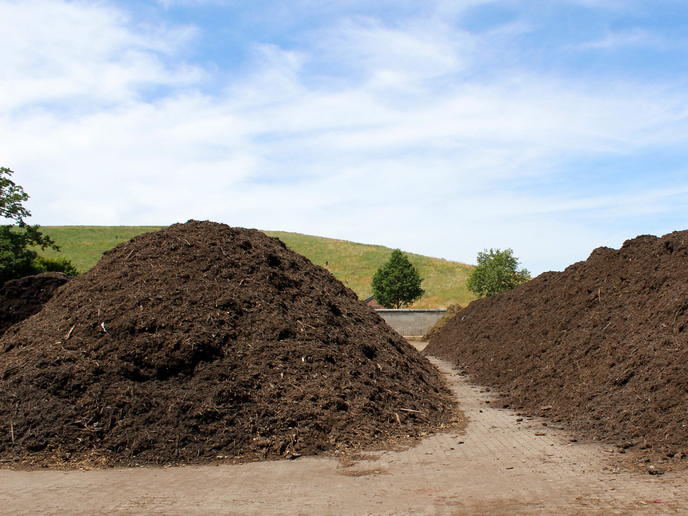
Globally, around 50 % of municipal solid waste is organic – food and kitchen waste and garden materials. Across eight European cities and regions, this urban biowaste is being repurposed as a valuable source of biomaterials for the circular bioeconomy. The EU-funded HOOP(opens in new window) project helped make it happen. With the technical, economic and regulatory groundwork cities needed to turn opportunities into action, the regions mobilised EUR 124 million for circular biowaste solutions, triple the initial investment target. The tangible results are a template for replication across Europe and beyond, from innovative household waste valorisation to an industrial symbiosis biopark and a pyrolysis reference centre.
Large-scale cross-sectoral collaborations close the loop
Almere (Netherlands) leveraged EUR 4.46 million in investments by clustering its dozens of scattered innovation projects into a multipurpose ‘bio-fibre bank’. Its new business-to-business model buffers fluctuations in biomass feedstock supply and bioproduct demand. Bergen (Norway) evolved from no separate collection to building a EUR 43.76 million industrial symbiosis biopark. It combines insect farming, microalgae production and anaerobic digestion to supply feed and nutrients for aquaculture. With decades of commercial success producing high-quality compost, the municipality of Greater Porto (Portugal) committed EUR 53 million to construct an anaerobic digestion plant coupled with a nutrient recovery facility. Together, they will extract nutrients from household biowaste for use as agricultural fertilisers and convert composting lignocellulosic residues to biochar via pyrolysis, supporting the region’s substantial agricultural sector.
From ground zero to leading expertise in pyrolysis and biochar
Münster (Germany), a global front runner in biowaste collection and separation, explored valorisation of wooden garden waste. HOOP confirmed the technical feasibility of pyrolysis to produce biochar and enzymatic hydrolysis pretreatment to boost biogas yields. “Launched from scratch, both projects are positioned for large-scale development while Münster has established itself as an expert in biochar,” says project manager Miguel Ángel Suárez of CETENMA(opens in new window). Kuopio (Finland) overcame numerous obstacles to other planned projects, ultimately establishing itself as a pyrolysis reference centre. Its EUR 830 000 pilot plant investment is operational since 2023, providing testing services to local industries.
Collecting and valorising household biowaste
With less than 10 % of biowaste separately collected, Murcia (Spain) leveraged EUR 6.79 million to improve this. An additional EUR 550 000 supported implementation of separate collection of used cooking oils. Albano Laziale (Italy) mobilised national-level stakeholder engagement and EUR 2.2 million, leveraging its high biowaste collection rate and quality. It designed multiple valorisation projects including the conversion of used cooking oils into bioplastic for the local cosmetics sector. Finally, Western Macedonia (Greece) – historically reliant on lignite mining and now the lighthouse with the highest European project participation – is creating a new value chain. A EUR 72 500 investment supported separate collection of spent coffee grounds for valorisation.
Fostering large-scale implementation and replication
Biowaste Clubs in each lighthouse territory brought together over 1 500 stakeholders from government, industry, academia and civil society, identifying barriers and co-creating context-specific solutions. These forums shifted municipal mindsets from waste management to product development, a critical cultural change reflected in the adoption of open market consultations and innovation procurement frameworks. The growing HOOP network(opens in new window) of 129 European cities and regions now shares these lessons through site visits and the Urban Circular Bioeconomy Hub(opens in new window), a one-stop shop offering self-assessment tools, financial models and certification guidance. HOOP created 76 direct jobs and positioned cities as agents of circular bioeconomy transition. “By proving feasibility early across technical, commercial and regulatory dimensions, the lighthouse cities attracted investment and built lasting capacity for sustainable biowaste management – a template for replication across Europe and sectors,” Suárez concludes.