Robots, smart tech and experience: rethinking work for an ageing Europe


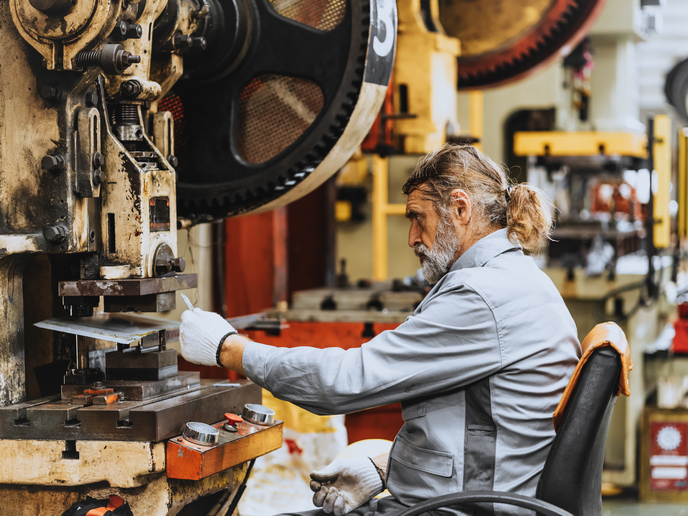
Europe’s workforce is ageing fast. The number of people(opens in new window) aged 55 and over in employment has jumped from 23.8 million in 2010 to nearly 40 million in 2025. Even though around 65 % of 55–64-year-olds are still working, vacancies remain stubbornly high at 2.1 %. Fewer young workers are stepping in to replace those retiring and the pressure is building – especially in industries that depend on physically demanding, repetitive tasks. “Ageing has become urgent in Europe because the workforce is getting older fast, while the pipeline of younger workers is not growing at the same pace,” says Daria Battini, professor of logistics and industrial facility design at the University of Padua and project coordinator of the EU-funded MAIA project(opens in new window). Few sectors feel this shift more than manufacturing. As the average age on the factory floor rises, so do concerns about fatigue, strain and recovery time. The question facing industry is no longer whether factories must adapt, but how.
From replacement to assistance
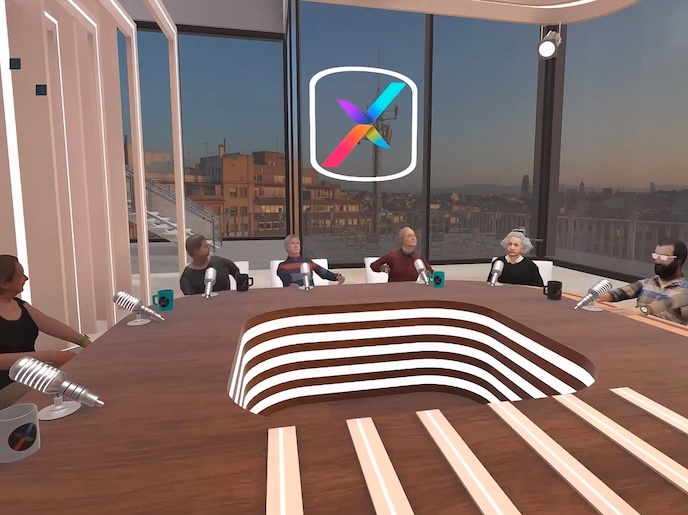
The MAIA (Models and methods for an active ageing workforce) project was funded under the Marie Skłodowska-Curie Actions(opens in new window) programme and brings together 14 universities from Europe, the United States, Japan, Canada, New Zealand and Hong Kong. Its aim is to redesign work so experienced employees can remain productive and engaged. Rather than treating ageing as a limitation, the project sees it as a design challenge. “In MAIA’s approach, ‘active ageing’ means designing work so that experienced employees can stay productive, safe and engaged – without pretending everyone has the same capabilities,” Battini explains. That often means using technology not to replace workers, but to support them. Collaborative robots can handle heavy lifting or awkward positioning while operators focus on precision tasks. Exoskeletons and ergonomic devices reduce muscle strain. Immersive virtual reality tools help workers train safely, test new layouts and refine movements without interrupting production. “Instead of ‘replacing the worker,’ the goal is to ‘remove the unnecessary strain and complexity,’ so skilled people can focus on value-added tasks,” Battini says. The project has developed immersive reality and motion-capture prototypes tested in ergonomics labs, with an emphasis on practical, worker-friendly solutions rather than high-tech showcasing.
Keeping knowledge in the factory
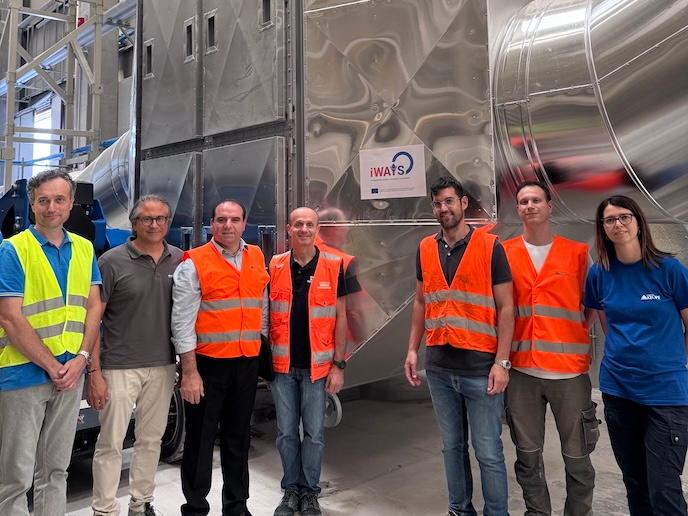
Another concern is the silent loss of expertise when experienced staff retire. MAIA treats knowledge retention as a strategic priority. “The idea is to turn tacit know-how into transferable practices so companies don’t restart from zero when skilled people retire,” Battini says. Some companies are already applying these ideas. In northern Italy, pump manufacturer DAB Pumps has launched its own initiative inspired by MAIA’s guidelines and the international ISO 25550:2022 standard on age-inclusive workforces(opens in new window), to which the project contributed.
Designing age diversity
The demographic shift is not unique to Europe. Japan and North America face similar trends, which is why MAIA was built as a global research network, allowing partners to compare solutions across industrial and cultural contexts. Looking ahead, Battini does not imagine factories with fewer older workers, but workplaces designed around age diversity as the norm. Workstations and schedules may become more personalised. Assistive technologies could reduce physical overload. Artificial intelligence may help capture and share expertise across generations. If Europe wants to remain competitive, the lesson is clear: innovation is not only about smarter machines. It is also about designing systems that value experience and ensure that ageing workers remain an asset, not an afterthought.