Innovative new strategies to tackle viral crop threats

Viral diseases can decimate vegetable crops, costing European agriculture billions of euro every year. Widespread infections can also lead to the overuse of pesticides, posing a potential health risk to both growers and consumers. To address this challenge, the EU-funded VIRTIGATION(opens in new window) project set out to develop new solutions to monitor viral risk and spread, to better understand viral-plant interactions and to develop biological alternatives to pesticides. The project focused on viral threats to two key crops: tomatoes and cucurbits (a family that includes pumpkin, melon, courgette and squash).
Addressing viral threats to tomatoes and cucurbits
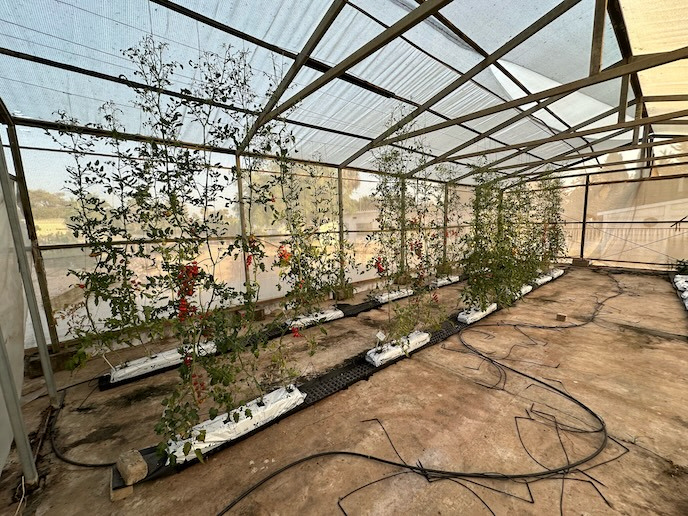
“These crops are produced in different set-ups across Europe,” notes VIRTIGATION project coordinator Hervé Vanderschuren from KU Leuven(opens in new window) in Belgium. “In northern Europe we tend to have greenhouses, while in southern Europe we have open fields with plastic tunnels. We wanted to mitigate viral disease threats in both situations.” Two major groups of viruses were targeted. The first were begomoviruses such as the tomato leaf curl New Delhi virus, a DNA virus mostly present in southern Europe, and which mostly impacts cucurbits. The second were tobamoviruses such as the tomato brown rugose fruit virus, which is mostly found in places with greenhouse production. “We were also interested in the specificity of each virus,” says Vanderschuren. “Tobamoviruses are spread mechanically, so you need to think about developing sanitation and hygiene measures. DNA viruses on the other hand are transmitted by insects – in this case whitefly – so you need other ways to intervene.”
Genetic resistance and vector transmission
To achieve its aims, the project brought together partners from universities and research centres as well as the private sector. Disseminating results to growers was also a critical component. “We built a strong consortium that looked at multiple approaches to tackling viral diseases,” adds Vanderschuren. “We were not betting on one solution but rather looking at a wide variety of options.” This work included fundamental research into genetic resistance as a viable means of intervention, as well as trying to better understand how vectors transmit viruses. VIRTIGATION partners were involved in launching the development of bio-based pesticides, which need to be effective if they are to compete on the market. Ways of breeding viral resistance in plants were also investigated. “We covered a wide spectrum,” remarks Vanderschuren. Greenhouse and field trials were conducted throughout the project, to help translate findings into viable management options for growers. For example, trials involving biopesticide formulations from natural plant extracts resulted in reductions in whitefly populations of up to 50-73 %.
Genomic surveillance tools and networks
A number of important results(opens in new window) were achieved. New genomic surveillance tools were developed to better track virus diversity, evolution and spread. A bioinformatics platform called Genome Detective(opens in new window) combined with sequencing technology profiles emerging viruses and identifies potential transmission links. These will help Europe to react faster in the future and develop effective crop protection strategies. The project also delivered new insights into genetic resistance, whitefly biology and plant-virus-vector interactions. Modelling future climate change scenarios enabled project researchers to assess how warming temperatures may alter whitefly-transmitted viruses in the future. All this will help Europe to be better prepared against viral threats. A long-lasting legacy of VIRTIGATION will be the continuation of its cross-border interdisciplinary network(opens in new window). This will ensure that farmers and growers – the people at the front line who will be critical to implementing change – will continue to be involved and on board with promising crop protection developments.