Analysing the resistance to exploitation among migrant farm workers

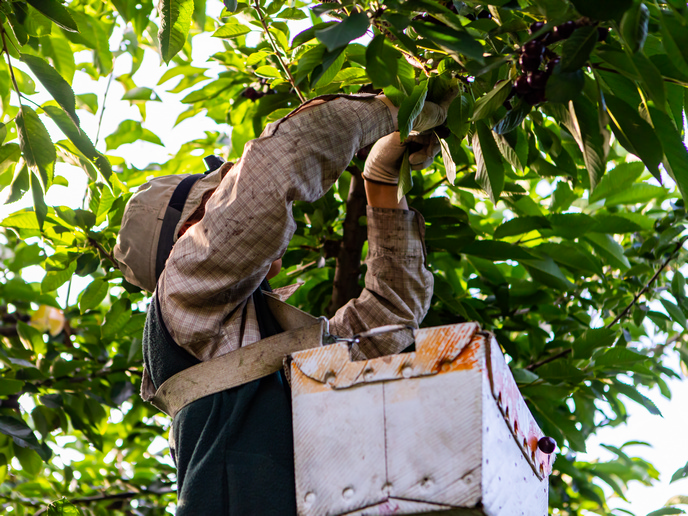
The exploitation of migrant workers across several fields of production is well documented. Extensive statistical evidence and studies across North America, Europe and Italy consistently point to a widespread and persistent problem. “To remain competitive and minimise labour costs, these systems ‘squeeze’ a workforce that has been historically and socially marginalised,” explains Eriselda Shkopi, research fellow at Ca’ Foscari University of Venice. In the Mig.Pro. project, undertaken with the support of the Marie Skłodowska-Curie Actions(opens in new window) programme, researchers aimed to shed light on the political subjectivities of migrant agricultural workers in Canada and Italy. The project sought to understand and amplify ‘practices of resistance’ among these workers, to bring visibility not just to their struggle but also to their actions seeking better conditions, dignity in work and equal rights. “Mig.Pro. focuses on how these individuals and groups, regardless of their legal status and marginalisation, challenge the material and symbolic boundaries of citizenship through everyday individual and collective struggles,” she remarks.
Investigating migrant rights through interviews and analysis
The goal was to acquire and test innovative methodologies in Canada to then apply and adapt them within the Italian context. “The parallel between the two countries is fascinating and urgent,” notes Shkopi. “These countries have different regulatory regimes, yet both create a ‘perimeter of citizenship’: access to rights that marginalises workers who are not also citizens and or do not have a secure legal status.” The team collected data through over 80 interviews in both countries, with migrant workers, activists, unions, researchers and advocacy networks. The study employed a multi-methodological approach, integrating media and policy analysis with intensive fieldwork, focus groups and participant observation.
A need for advances on multiple fronts
The findings highlight that while exploitation is systemic in both contexts, legal measures and regulations – though diverse – are no longer sufficient on their own. One key finding of Mig.Pro. was that labour exploitation cannot be tackled by legal or repressive measures alone, for example. “We need to bring all dimensions together: a radical cultural, political, economic and legal shift in both migration and industrial relations is necessary,” Shkopi explains. The project also uncovered a key difference in the practices of self-organisation and the methodologies of support provided by networks of supporters in the two countries. For example, Canada’s #StatusForAll campaign represents a migrant-led, grassroots alliance-building effort focused on securing legal status as a gateway to fundamental rights. “By bridging the gap between migrant activists and academia, it provides invaluable insights for the Italian landscape and, I would venture to say, for the European framework as well,” says Shkopi.
From research to policy recommendations
The legacy of Mig.Pro. is embodied in a set of policy recommendations co-developed with project participants, which include strengthening migrant-led solidarity networks and establishing representative bodies directly led by migrant workers. Findings are being presented at both national and international conferences, while upcoming academic publications will be made available to the scientific community and project participants. “The future trajectory and practical applications of this knowledge will be determined in collaboration with the participants themselves,” adds Shkopi. “This will ensure the insights remain aligned with their identified priorities and continue to empower migrant-led movements and local communities on both sides of the Atlantic.”