



A wildfire management approach for more climate-resilient land systems


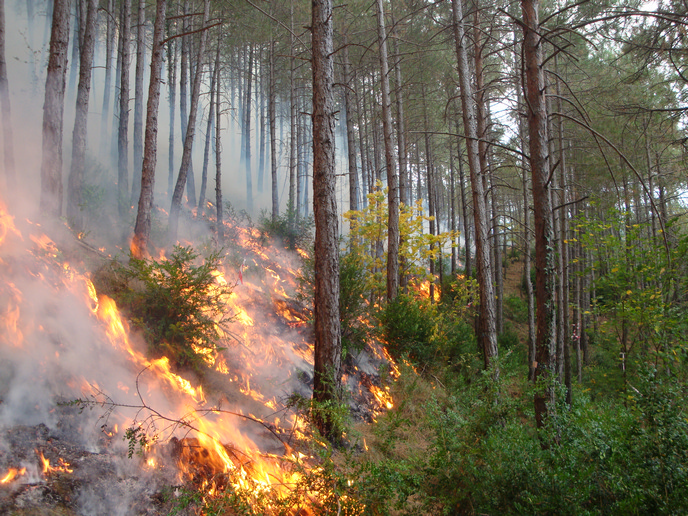
In the summer of 2025, Europe experienced one of its worst seasons in terms of wildfire damage: a total burnt area of 1 034 552 hectares(opens in new window) was recorded, marking a significant increase from the previous year. The numbers confirm an upward trend: wildfires are becoming more frequent and intense, posing a serious societal and environmental threat. The EU-funded FIRE-RES(opens in new window) project is pioneering an integrated approach to address extreme wildfires, focusing on science-based multifunctional resilient landscapes, economic incentives for maintaining them, multi-actor governance and advanced technological solutions for enhanced preparedness, detection and response efforts.
A new fire management plan
Traditional wildfire strategies in Europe have focused mainly on early detection and suppression. However, with extreme wildfire events increasing rapidly, this by itself is no longer enough. “FIRE-RES promotes a shift towards landscape resilience and integrated fire management (IFM), which considers wildfires as part of a broader socio-ecological system rather than an isolated emergency,” says FIRE-RES project coordinator Antoni Trasobares. To that end, employing the IFM approach means consolidating prevention and preparedness, detection and response, and post-fire restoration and adaptation into a single coordinated framework. This approach involves not only firefighters, but also farmers, foresters, land planners and local communities, who become key players in creating more resilient landscapes.
From concepts to real-world applications
The project has set up 11 Living Labs across the EU and in Chile to test its proposed solutions in real-environment settings and assess how different approaches perform across diverse wildfire scenarios. The 34 innovative actions implemented include the demonstration of landscape-based prevention strategies – for example combining grazing, forestry and farming practices to reduce vegetation fuel and create natural fire breaks. “These solutions not only lower fire risk but can also support rural livelihoods by linking wildfire prevention to productive land use,” Trasobares adds. FIRE-RES is also testing new governance and incentive mechanisms, including linking fire-resilient land management to local value chains. The introduction of the Fire Wine(opens in new window) brand is a notable example illustrating how prevention can be financially beneficial for local communities.
Cutting-edge tools to improve prevention and response
FIRE-RES developed and tested monitoring, modelling and decision-support tools together with the end users. These include drone-based fire detection systems, pseudo-satellites for real-time monitoring, improved wildfire risk maps and digital platforms integrating environmental data with operational information for firefighters and land managers. “By providing more accurate and timely information, these tools help authorities plan interventions, allocate firefighting resources more effectively and improve safety for response teams,” Trasobares says. Launched simultaneously with the project, the Open Innovation Challenge(opens in new window) extended an open call to stakeholders (innovators, entrepreneurs and researchers) to submit proposed solutions to challenges associated with extreme wildfire risk. The positive reaction led to actions that can successfully be integrated into real operational workflows.
Green gains
Reducing wildfire risks and managing incidents when they occur are crucial for environmental health. By developing strategies that support sustainable land use, FIRE-RES has contributed to protecting ecosystems that are critical for carbon storage, biodiversity and rural livelihoods. Project work has also supported European targets such as reducing accidental fires, lowering emissions from wildfires and improving the resilience of protected areas, offering a robust basis for implementing the Nature Restoration Regulation(opens in new window) in Europe.
Europe as a wildfire-resilient territory
The solutions and tools developed by the project were designed with a long-term vision in mind: to maintain application long after project closure. To that end, FIRE-RES has adopted an extended framework, whereby the network of Living Labs will continue scaling up successful practices and sharing the knowledge acquired. “FIRE-RES aims not only to deliver new tools but also to build a lasting culture of integrated wildfire management across the continent,” Trasobares concludes. “By providing more accurate and timely information, these tools help authorities plan interventions, allocate firefighting resources more effectively and improve safety for response teams,” Trasobares says. Launched simultaneously with the project, the Open Innovation Challenge(opens in new window) extended an open call to stakeholders (innovators, entrepreneurs and researchers) to submit proposed solutions to challenges associated with extreme wildfire risk. The positive reaction led to actions that can successfully be integrated into real operational workflows.