Deciphering the role of memory in perceptual experience

How do past experiences shape present perception? This is one of the guiding questions of cognitive neuroscience. Memory and vision are usually seen as separate fields in the study of brain activity, but the CHROME(opens in new window) project, with funding from the Marie Skłodowska-Curie Actions programme(opens in new window), explored the mechanisms through which memory and perception shape each other.
Testing serial dependence
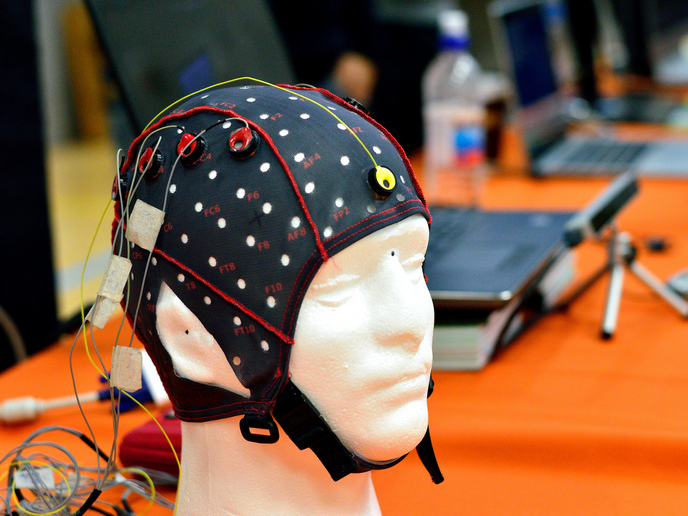
A key mechanism in how people form perceptions is serial dependence(opens in new window). In visual perception, this refers to how something seen a moment earlier will influence our present perception. Marie Sklodowska-Curie Actions fellow Darinka Trübutschek devised several experiments to test this phenomenon. As Trübutschek explains, “To study serial dependence, we asked participants to make very precise judgments about simple visual features, like the orientation of an object, across long sequences of trials. By tracking responses across many trials and combining behavioural data with eye-tracking, we saw that people show consistent patterns in how their past experience shapes their perception.” To better understand what was happening in participants’ brains, Trübutschek used magnetoencephalography (MEG)(opens in new window), a non-invasive technique that measures the brain’s responses to visual stimuli. CHROME also piloted a new paradigm to be used for intracranial electroencephalography to explore the role of the hippocampus brain region in perception.
Stable perceptual phenotypes and other key takeaways
The project reached several important conclusions that will guide cognitive scientific research moving forward. For example, it was shown that not all memories have the same influence. “In some of our experiments,” Trübutschek notes, “we showed that information that is actively held in working memory – something that is relevant for the task – can override the influence of more recent sensory history. In other words, what you are holding in mind can matter more than what you have just seen.” A particularly noteworthy result is that participants exhibited stable, individual differences – stable perceptual phenotypes – in how previous sensory input affects perception. Individuals whose perceptions leaned towards the previous stimuli exhibited attractive bias, and those whose perceptions were more likely to diverge showed repulsive bias. This pattern was very stable in individuals across multiple tests.
Implications for understanding perception
With experimental paradigms and robust behavioural, eye-tracking and MEG datasets, CHROME has made important contributions that will aid future research, including the development of computational models. These assets are meant to be used by other scientists, and due to repeated measurements, the datasets will allow continued study of individual effects. The experimental paradigms are flexible and can be adapted to new populations and research questions. Understanding that perception is more than simply taking in the objective reality of the world has implications for education and clinical neuroscience. For students of all ages, educators must grapple with the fact that prior knowledge not only supports learning, but actively shapes how new information is perceived. In conditions where perception is altered, such as autism and schizophrenia, a deeper understanding of how memory and sensory input co-produce perception may inform a deeper understanding of the condition. The project’s conclusions have broad implications. “To understand behaviour, we need to understand not just what information people receive, but how their recent experience shapes what that information becomes,” highlights Trübutschek.