Exploring the neural mechanisms behind our musical experience


It’s not unreasonable to consider music as something akin to magic. Listening can transform our emotions, alter the way we see the world and even transport us, through memory, to another time and place. At its heart, this is a highly analytical experience: we process complex musical scenes instantaneously, incorporating cultural norms, separating mixtures of sounds and feeling moments of anticipation and release. These remarkable cognitive abilities are still beyond our understanding, though careful study is starting to unravel some of the mechanisms at play. In the NEUME project, which was funded by the European Research Council(opens in new window), researchers explored how the plasticity of our brains helps us — and other animals — experience music over multiple timescales. “Multiple timescales refer literally to the timescale of the experience, from immediate as you listen to the music and react to it, to lifelong exposure to the music of one’s own culture,” explains Shihab Shamma, professor of Electrical and Computer Engineering at the University of Maryland and the Cognitive Sciences Department at the Ecole normale supérieure – PSL (Paris).
Recording neural responses to musical pieces
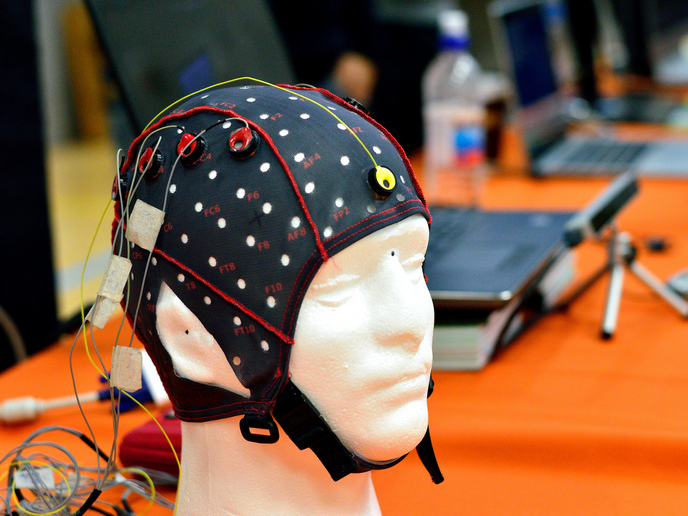
The team conducted several experiments recording neural responses to music in humans and non-human animals. “We relied often on the fact that responses are sometimes unpredictable reflecting clever twists in the musical streams, or the musical memory and knowledge of the listener,” Shamma notes. The team then studied where in the brain these unpredictable responses occur, how they adapt over time as the musical piece becomes familiar, and how this relates to the pleasure (or lack of it) felt by the listener. The researchers also assessed how responses evolve as music from other cultures becomes more familiar. “We adapted these findings to other signals to deepen our conclusions for instance treating learning a second language like listening to an unfamiliar musical piece and using the findings to assess the language competency of the listener,” Shamma adds. Other studies went beyond music and deeper into the analysis of real and imagined speech.
Digging into the specifics of the musical experience
The project led to a series of insightful results, including the discovery of what imagined music, speech or sounds looks like in the brain compared to its listened version. “This is exciting because it has suggested many scientific ideas and theories, and of course applications,” notes Shamma. The researchers also discovered how waves of tension and release (and enjoyment) are felt during engaged listening to music, and how rapid plasticity in the brain occurs unconsciously through implicit learning, through playing randomly on a piano, for example. This contrasts to explicit skilful learning, which requires us to be able to map a melody to finger movements. There are several practical implications for the research. Decoding imagined speech, for example, could allow us to communicate with locked-in patients. Assessments of tension-release cycles could also be used to measure the ability of people with autism to engage with their environment.
Further exploration of the human musical experience
Shamma explains how the project exposed him to a world of ideas that are very exciting to explore further. Some of these, such as decoding thoughts and exploring their origins in the human mind, are very advanced. “Others involve the transformations from sensory perception to motor actions,” says Shamma. “This has led me to many exciting potential projects, for instance, to try to decode the intentions of humans as they feel the urge to act, or to direct their cognition towards different goals.”