Tracking invisible pollutants beneath our cities



Groundwater is vital to human health and prosperity, representing 30 % of our planet’s freshwater(opens in new window). It is stored in and moves through aquifers. These underground layers of rock or sediment are a vital water source for domestic, industrial or agricultural use. As groundwater resources in urban environments are under increasing pressure from climate variability, pollution and overexploitation, the quality of the aquifers’ recharge is more important than ever. Funded by the Marie Skłodowska-Curie Actions programme, the SPONGE project sought to understand how microplastics and emerging contaminants in runoff water impact aquifers. The aim was to determine whether stored runoff water could be used to improve urban aquifer resilience to groundwater scarcity.
Moving beyond traditional methods to better detect harmful particles
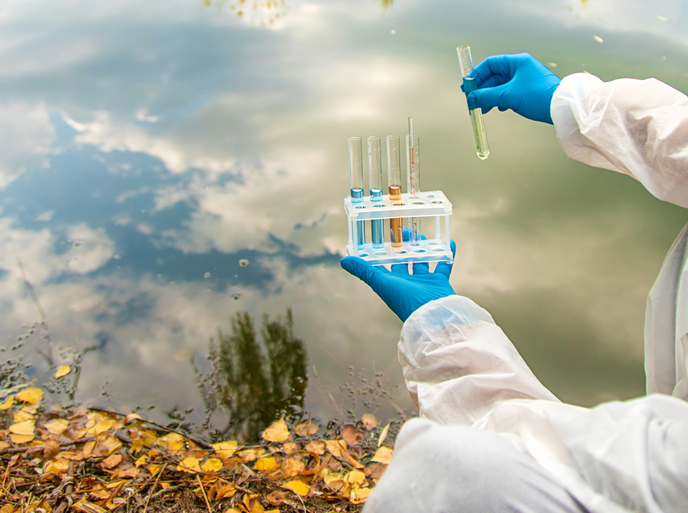
SPONGE’s first line of action was to monitor groundwater in 11 wells over a 17-month period between 2023 and 2025 and collect samples from potential contamination sources, including runoff water and wastewater. These samples would then be analysed for microplastics, antibiotics, pharmaceuticals and chemical tracers. To carry out this analysis, SPONGE introduced a novel multi-tracer approach that integrates isotopic, chemical and pharmaceutical data to trace potential contamination pathways. The results highlighted wastewater leakage as the main culprit, offering new insights into the processes behind its distribution. Early on, the team came up against the limitations of existing detection and identification techniques. As project fellow Stefano Viaroli explains, “We found that commonly used protocols and spectroscopic techniques are unable to detect and characterise particles smaller than 20 µm. To address this, we tested an innovative approach using atomic force microscopy to detect microplastics at the nanoscale.” Although the method is not yet widely applicable due to high costs and challenges in detecting polymer types, results were very promising, opening new possibilities for the characterisation of microplastics and their relationship with other aquatic contaminants.
Advanced numerical modelling for groundwater assessments
Real-world groundwater conditions are difficult to replicate in laboratory settings, affecting accuracy. Employing 3D simulations, SPONGE modelled microplastics transport in porous media under varying hydraulic gradients, improving predictive capability and reflecting real conditions. The numerical model was put to the test in a city-scale simulation of aquifer recharge in Shenzhen, a China metropolis in the Guangdong province, showing that shallow aquifers in such areas carry a high pollutant load. “Large urban runoff collection systems have proven to be potential sources of significant contamination, as they can receive sewer overflows,” Viaroli points out. “These findings improved our understanding of groundwater quality and the main drivers of subsurface contamination,” he adds.
An intercultural endeavour
The SPONGE consortium carried out many of its activities in collaboration with the Southern University of Science and Technology – SUSTech(opens in new window) in Shenzhen. The partner institution provided facilities, instrumentation for groundwater monitoring and sampling as well as analytical equipment for chemical and pharmaceutical analyses. “The opportunity to conduct research in an environment entirely different from the European context was highly stimulating, allowing us to observe a new approach to research and to engage with colleagues at all levels, exchanging ideas and experiences,” notes Viaroli. “One of SPONGE’s key achievements was the refinement of sampling and pre-treatment methods for groundwater, helping to better define aquifer vulnerability to microplastic contamination,” concludes Viaroli. As such, SPONGE paved the way for safe urban aquifer recharge and consequently healthier and more resilient aquatic ecosystems.