



Translators as agents of change in Japan

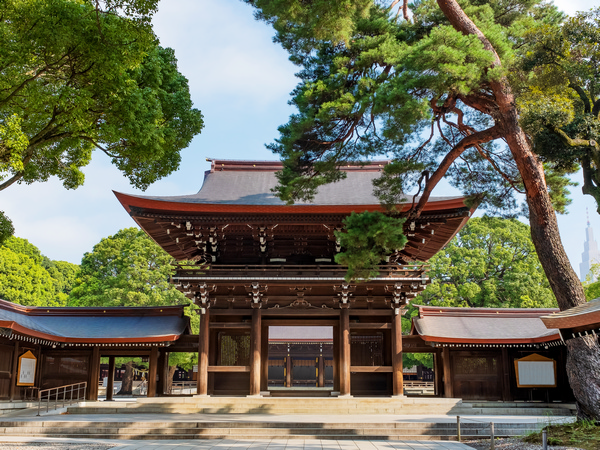
Japan’s Meiji era saw the country begin to open up to foreign nations after a period of political isolationism that ran between 1633 and 1853. “When American naval commander Matthew Perry arrived with gunboats, Japan realised that the outside world had advanced technologically much more quickly than Japan had,” explains IMPACTRANS project coordinator James Hadley from Trinity College Dublin(opens in new window). “As a result, Japan aimed to become a global power as quickly as possible, imitating the expansionist European and North American powers. Part of this process involved translating huge amounts of material, not only literature but technical documentation that would assist the country in developing into the 20th century.”
Analysing the role of famous translators
The IMPACTRANS project, which was supported by the Marie Skłodowska-Curie Actions(opens in new window) programme, focused on the role of these translators, some of whom gained substantial amounts of recognition. However, most language knowledge was focused on English, French and, to some extent, German. Other languages therefore had to be translated indirectly. In addition, because of all the new ideas that were flooding into Japan at the time, even the Japanese language was being reshaped to accommodate them, partly through translation. In this context of rapid upheaval and change, Hadley wanted to better understand whether translations produced by famous translators were different to those made by less famous translators, and whether indirect translations worked differently from the direct ones. “We hypothesised that famous translators would have most liberty to do novel things with expression and that the indirect translations would be more experimental than the direct ones,” says Hadley. “But we genuinely didn’t know whether this was the case or not.”
Translation as a complex and nuanced influence
In order to get answers to these questions, Hadley and his team built up a digitised database of translated texts, along with non-translated Japanese texts from the same period for comparison. The vocabulary and syntax used in different kinds of text were analysed. “It was much easier to find texts that were direct translations by famous translators than indirect translations by non-famous translators,” adds Hadley. “In some cases, therefore, we didn’t have much to compare.” The project also suggests that ‘translator fame’ was on a sliding scale. People who were at the top acted differently from people who were still famous but lower down the scale. “The picture was much more complex than our initial hypothesis had assumed,” remarks Hadley. “We showed that more groundwork is needed to properly answer the questions we posed.”
Impact on the Japanese language
Nonetheless, IMPACTRANS was able to make several conclusions, such as how translation at the time was a very male activity, and a somewhat elitist one. Translators with cultural capital were afforded more aesthetic freedom than the translators with less. Translation was also shown to have had a tangible impact on the Japanese language, though again, the effect was complex and nuanced. Overall, Hadley hopes that the project has helped to underline the often-overlooked importance of translation as a driver of social change, and the need for further research. “Aspects like, who the translator is or where the source text comes from, and whether it was translated directly or not, are all important factors,” he notes. “Vastly more work is needed to fully answer our own research questions.”