Solar flow reactors turn carbon dioxide into fuels

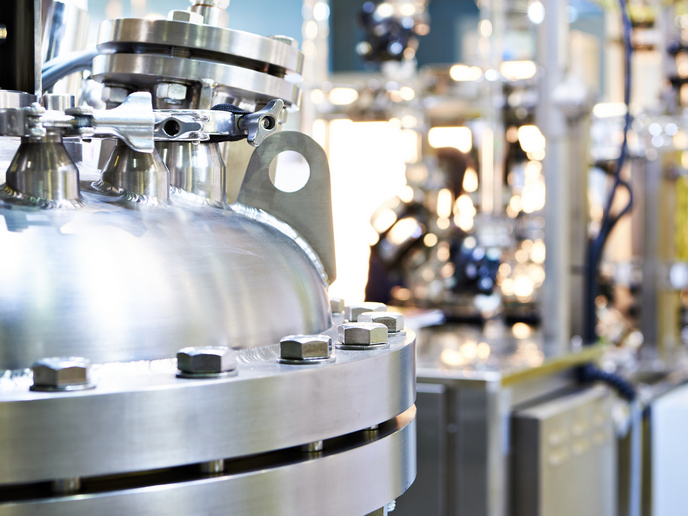
Turning carbon dioxide into useful fuel sounds simple, but the chemistry is demanding. The challenge is to make carbon dioxide and water react selectively, efficiently and for long enough that the process could one day matter outside a laboratory. The EU-funded NEFERTITI project(opens in new window) developed a solar-driven reactor system for making liquid fuels from carbon dioxide and water. It worked on photocatalysis – a process in which light activates a catalyst to enable a chemical reaction – and tested continuous-flow reactors rather than closed batch vessels. The work connects to wider European research on solar conversion of carbon dioxide and water into multi-carbon compounds.
Solar flow reactors produced ethanol and other fuels
The project aimed to integrate two photocatalytic reactors, light-harvesting components and purification into one system validated at technology readiness level 4 (TRL4), meaning an early laboratory-scale technology tested in a relevant environment. By the end, the system showed that product output could change with operating conditions. Project coordinator David González Gálvez, area manager at Leitat Technological Center(opens in new window), explains: “By the end of the project, the integrated system demonstrated a flexible product spectrum depending on reaction conditions.” Under some conditions, it produced ethanol and other longer-chain alcohols; under others, it produced methane, methanol and acetone. Ethanol emerged as the most realistic near-term target because it balanced selectivity, process maturity and market relevance.
Continuous-flow reactors improved control of fuel production
A central choice was to move from batch chemistry to continuous flow, where reactants pass steadily through the reactor. González Gálvez says, “The main advantage of continuous-flow reactors is the high level of control they offer compared to batch systems.” This matters because light distribution, heat transfer and contact between gases, liquids and catalysts all affect output. The project also shifted from carbon dioxide dissolved in water to ‘wet’ carbon dioxide, a gas stream carrying water vapour. This made more carbon dioxide available to the catalyst and increased reaction rates. The trade-off was that humidity control became one of the hardest issues in the first conversion step.
What solar fuel technology still needs before scale-up
The integrated process still faces a bottleneck: low conversion in both reaction stages. Even when selectivity towards ethanol and higher alcohols is strong, overall productivity can remain limited. At higher conversion, the system may shift towards methane, reducing the yield of the desired liquid products. González Gálvez underlines the next step: “The clearest next step to move from TRL4 towards industrial consideration is improving both performance and durability.” Most experiments used controlled artificial light, while real sunlight was tested mainly for stability. Future work, therefore, needs better long-term catalyst stability, higher conversion without losing ethanol selectivity and a clearer understanding of how fluctuating sunlight affects performance. The NEFERTITI project did not deliver a market-ready fuel plant. However, it delivered a tested route for coupling carbon dioxide, water, light and flow chemistry on a single platform, as well as a clearer view of what must improve before solar fuel production can move closer to industrial use.