



Exploring the role of microbes in protecting plants against disease

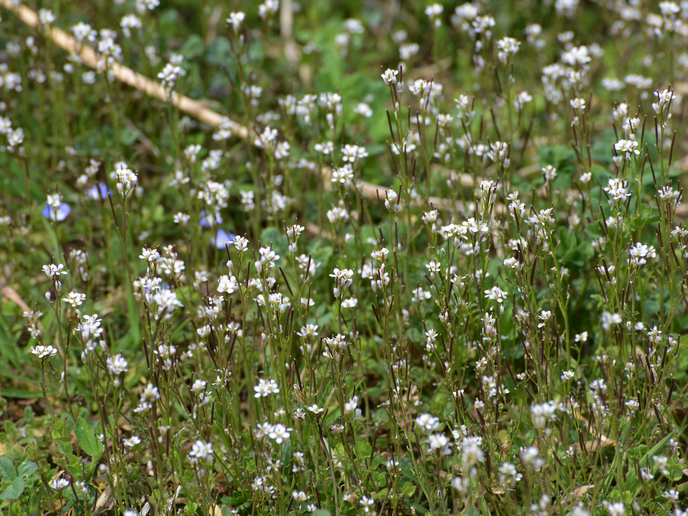
Many microbes are involved in protecting their host plants against invading pathogens. They do so by producing small molecules known as metabolites, chemicals that can block harmful enzymes called proteases. While research into these plant-dwelling microbes has grown, there is still much to learn about the complex interactions they have with plants and pathogens. “For many years, studies of plant microbiomes focused primarily on identifying which microbes were present, rather than understanding the chemical interactions occurring between them and with the plant host,” says Daniel Petras(opens in new window), assistant professor in the Department of Biochemistry at the University of California, Riverside(opens in new window). “This challenge is particularly relevant in the phyllosphere, the microbial habitat found on plant leaves.” However, recent advances in non-targeted and functional metabolomics, synthetic microbial communities, and computational approaches have made it possible to investigate these complex metabolic interactions and their role in plant health and disease resistance. Through the MeStaLeM project, which was supported by the Marie Skłodowska-Curie Actions(opens in new window) programme, Paolo Stincone(opens in new window), a postdoctoral researcher, co-mentored by Petras and Eric Kemen, professor of Microbial Interactions in Plant Ecosystems at the University of Tübingen(opens in new window), leveraged some of these technological advances to investigate the substances produced by plant-dwelling microbes. The researchers aimed to create a synthetic microbial community to find out the beneficial impacts of these substances and the negative impacts when the plant microbiome breaks down. “Our results provide new insights into the molecular mechanisms through which leaf-associated microbial communities contribute to plant health,” notes Petras.
Stabilising a synthetic microbial community
The researchers first combined a ‘dropout approach’ using a synthetic microbial community. “By systematically removing individual community members from this artificial microbiome, we were able to identify metabolites and microbes whose abundance changed dramatically when specific members were absent,” explains Stincone, who led the MeStaLeM project. “This allowed us to pinpoint metabolites that play important roles in microbial community interactions,” he says.
Microbe cooperation in iron acquisition
The team found that some of these metabolites, particularly siderophores involved in iron acquisition, play a crucial role in shaping microbial community dynamics. “Rather than acting independently, microbes can benefit from metabolites produced by other community members, creating networks of cooperation that help stabilise the microbiome,” remarks Stincone. “These interactions favour beneficial microorganisms by enhancing their ability to acquire the limited iron available on leaf surfaces, while restricting pathogen establishment through increased competition for this essential nutrient.” Through this cooperation, beneficial microbes cooperate by sharing molecules to acquire iron, while plant pathogens are unable to do the same. “This reveals a previously unrecognised mechanism by which the phyllosphere microbiome contributes to plant health,” notes Stincone.
Promoting future plant health
The project results show that understanding metabolic interactions between microbes is essential for explaining microbiome function and disease resistance. These findings complement the European Research Council(opens in new window) funded DeCoCt(opens in new window) project, which used long-term field studies and synthetic microbial communities to identify ecologically relevant members of plant-associated microbiomes. MeStaLeM adds to this, revealing how metabolite-mediated cooperation can contribute to the stability and protective function of beneficial leaf microbial communities. “In the future, this knowledge could help researchers design microbial consortia that promote plant health or identify metabolites that enhance the activity of beneficial microbes,” adds Kemen. “Ultimately, these approaches could contribute to more sustainable crop protection strategies and reduce dependence on chemical pesticides.”