Analysing museum specimens to improve our knowledge of fungi

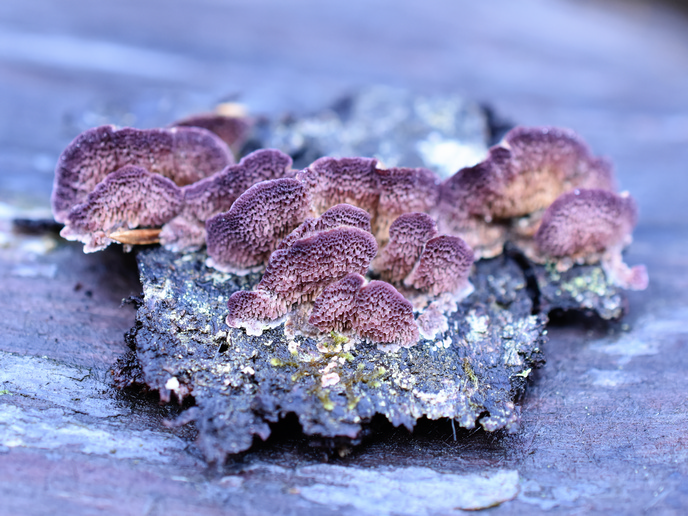
Humans have lived alongside, eaten and used mushrooms for many thousands of years. But despite much recent research into our fungi friends, there is still a lot we don’t know. “In many cases, you have two or three studies that provide completely different results, usually in ways that are surprising,” explains Miguel Angel Naranjo-Ortiz(opens in new window), a researcher at the University of Oslo(opens in new window). We still don’t know how far mushroom spores can disperse, for example, or how much they mutate, with estimates varying wildly. Through the MUSHEUM project, which was funded by the Marie Skłodowska-Curie Actions(opens in new window) programme, Naranjo-Ortiz and his colleagues turned to museum exhibits to try to reduce some of this uncertainty. “The idea was to compare populations from the present with populations from the past,” says Naranjo-Ortiz. The research focused on a species known as Trichaptum abietinum. The researchers combined genetic data with weather records, to try to find evidence of adaptation in Norway, a country that has warmed a lot from climate change.
Exploring museum collections
The team selected a set of samples with ‘low value’ from the collection at the Natural History Museum(opens in new window) in Oslo, those from time periods and geographic areas with a high number of samples. The researchers used these to optimise protocols and test whether it was possible to obtain DNA of sufficient quality. They then selected cohorts of samples to compare, using one group from the 1910s and earlier, another from the 1930s, and another from the 60s and 70s. However, due to unexpected delays with broken equipment, Naranjo-Ortiz had to pivot, and decided to play a bit with the data he already had. “And then the surprise came,” he says. Naranjo-Ortiz found that gene content varied a lot from one individual to another, even when comparing isolates from the same area. “In Norway, we found that over 10 % of the genes of a single spore isolate were not found in another single spore isolate of the same locality, and vice versa,” notes Naranjo-Ortiz. “This was not something we could simply ignore.”
A fungi side project
This unplanned side project found supporting evidence that for most of their life cycle, these mushrooms grow as an individual with two genetically distinct nuclei that remain separated. “This is very unusual,” remarks Naranjo-Ortiz. “One would expect that the two nuclei would fuse, but no.” His theory is that they cannot, and he now has compelling evidence this is happening in two different mushroom species. “That’s why I want to analyse many fungi, to prove that this is a common pattern in all mushrooms,” he adds. Naranjo-Ortiz believes the results will help with fungi research yet may also explain many aspects of their biology. For example, some mushrooms cause adverse reactions in some people but not others. “We have traditionally assumed the problem lies in the person, but perhaps it is the opposite; only some individuals of the fungus have the capability of producing toxins,” he explains.
Characterising the pangenome
For Naranjo-Ortiz, the findings suggest characterising the pangenome (gene content) of a mushroom species in a standardised way could help in understanding its biological role, by allowing comparisons between different species. “I would like to prove the hypothesis that this is a feature of mushroom-forming fungi by analysing many genomes of many different species of fungi, not only mushrooms,” he adds.