From crash statistics to predictive road safety

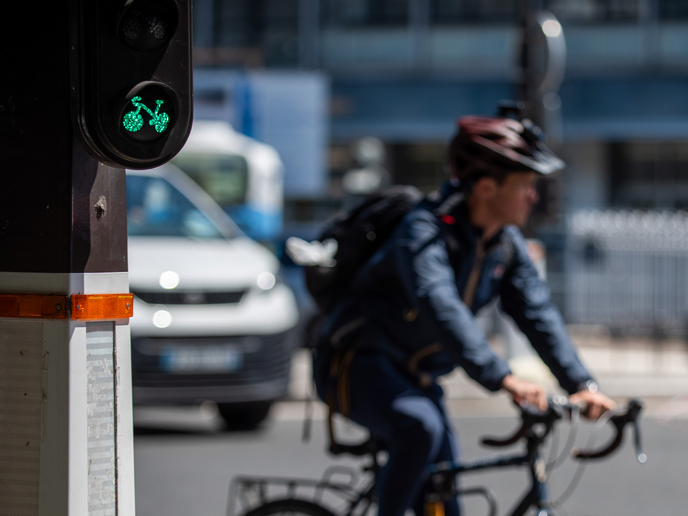
Bicycles, e-scooters and other forms of micromobility are becoming commonplace in urban environments. This has put the safety of users under growing scrutiny. While cars feature advanced safety technologies (and often use infrastructure designed primarily for their use), micromobility users do not have the same levels of protection. Addressing this has become a European policy priority. The long-term goal of the EU’s vision zero(opens in new window) strategy is to move as close as possible to zero fatalities in road transport by 2050. To achieve this, projects including SOTERIA(opens in new window) are exploring how data, technology and citizen engagement can help cities prevent collisions before they occur.
Empower citizens to be part of the solution
SOTERIA looked at how cities can move beyond relying solely on crash statistics by combining mobility, infrastructure and behavioural data to identify risks before collisions occur. Alongside this technical approach, the project empowered citizens to become active contributors to safer urban mobility through co-creation activities and Living Labs. Open-ended workshops were held to enable road users to talk about their mobility experiences and think about solutions for everyday challenges. “A delivery company for example was interested in finding ways of better protecting its employees,” says SOTERIA project member Marina Georgiou from Netcompany(opens in new window) in Luxembourg. Alongside stakeholder engagement, SOTERIA brought together multiple sources of mobility and infrastructure data to support predictive road safety analysis. The project also explored ways of enabling secure data sharing between stakeholders. Artificial intelligence (AI)-supported analysis, near-miss detection, safer route planning and situational awareness tools were developed to help cities better understand and anticipate road safety risks.
Testing different mobility challenges
These approaches were validated across four Living Labs representing very different mobility environments. Madrid provided a dense metropolitan setting; Saxony combined urban and rural contexts; Oxford represented a university city with high levels of active travel; while Chania and Igoumenitsa highlighted the challenges of seasonal tourism and rapidly changing traffic patterns. The Living Lab in Oxford for example collected evidence of safety issues for cyclists, and tested innovative sensory solutions designed to improve the safety of pedestrians and micromobility users. A prototype digital tool to facilitate more proactive road safety use was trialled in Madrid, in collaboration with the local police. “The project team also analysed policy and accident reports while systematically collecting information on near misses using sensor kits and smart cameras,” adds Georgiou. “Near misses are often the missing piece of the puzzle because they reveal dangerous situations before serious collisions occur.”
Smart applications and AI-driven tools
These Living Labs provided specific feedback relevant to each site – an absence of underpasses at necessary intersections in Oxford for example – and also highlighted issues common to all. These included a lack of well-designated cycle lanes, poor road surface conditions, inadequate street lighting and signage, and accessibility issues for people with disabilities. Out of this, the project team was able to identify common solutions that can be taken up by local authorities and policymakers. These include implementing comprehensive infrastructure upgrades and adaptations to improve road safety and launching awareness campaigns to promote safer road use. Prototype technological solutions included AI-driven applications supporting safer route planning, behavioural nudging and citizen reporting of hazards affecting pedestrians, cyclists and other vulnerable road users. Beyond these technologies, SOTERIA leaves cities with practical guidance on proactive road safety, data governance, stakeholder engagement and policy recommendations, providing a foundation for municipalities seeking to reduce risks before collisions occur and supporting Europe’s wider vision zero ambitions.