Smart pills made from toothpaste and honey

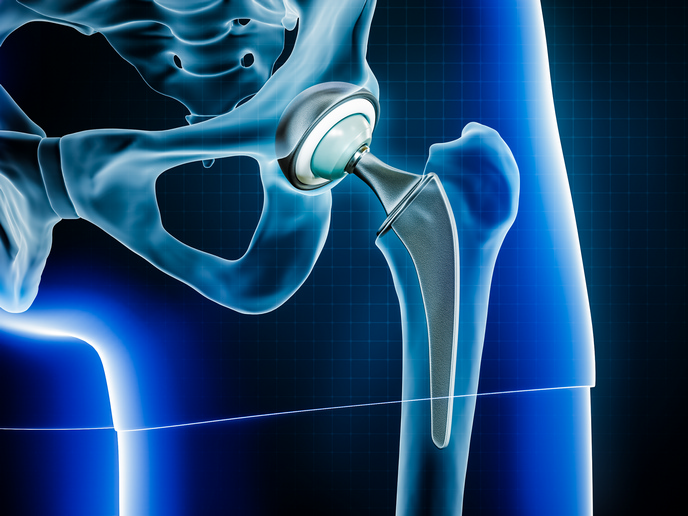
Technology that can be swallowed or implanted in the body offers clinicians real‑time data on pH, body temperature and other physiological parameters, while also enabling targeted treatments that reduce the need for surgery and other invasive procedures. However, hazardous materials in these devices pose a threat to the environment when they are discarded, and to the patients themselves. “Administering most current ingestible devices must be supervised for safety, resulting in missed opportunities for mass health screening programmes,” says Mario Caironi, coordinator of the ELFO(opens in new window) project, which was supported by the European Research Council(opens in new window) (ERC). Caironi and his team from the Printed and Molecular Electronics Laboratory(opens in new window) at the Italian Institute of Technology are developing edible electronics made from foods, food ingredients and additives, and non-toxic materials. “After performing their function, these electronics can be naturally digested or even metabolised, with no e-waste,” explains Caironi.
Developing the edible prototypes
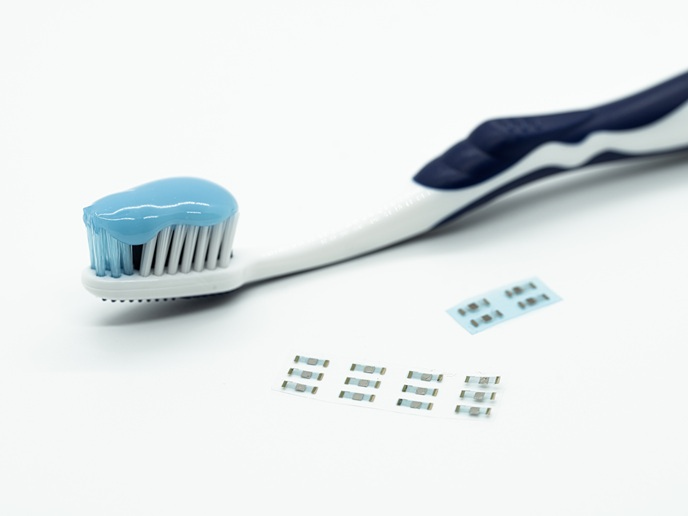
The ELFO project developed the components needed to build two conceptual products: a smart pill to monitor gastrointestinal health, and a radio-frequency sensor to monitor food products for safety and quality. The team’s first step was to build a library of candidate materials that offer useful electronic properties and are easily processed in the body, guided by regulators such as the European Food Safety Authority(opens in new window) and US Food and Drug Administration(opens in new window). Materials that could act as conductors, insulators and semiconductors were optimised, and tested in simulated gastric and intestinal fluids to ensure these properties were retained inside the body. “It was very exciting to see how some exotic materials worked unexpectedly well. Honey turns out to be great for gating transistors, and toothpaste pigment offers an excellent stable semiconductor,” notes Caironi.
Crafting edible smart pills and food sensors
The next step was to demonstrate how these materials could be built into electronic components such as circuits, sensors and power supplies, using low-temperature liquid-based techniques such as inkjet printing. The team made thin semiconducting films based on beta-carotene (the orange pigment found in carrots), and ion-conducting dielectrics made with honey and shellfish-derived chitosan. Sensors were made from water, salt, non-toxic metals (such as gold leaf) and red cabbage juice. The project also built the world’s first edible rechargeable battery, based on riboflavin, quercetin (a yellow pigment found in onions), nori seaweed, activated carbon, edible gold and saltwater. Nominated among the best inventions of 2023(opens in new window) by ‘TIME’ magazine, the edible battery will allow smart pills to recharge themselves via an energy harvesting module. “We progressed the edible battery to a level where it can power most ingestible devices,” adds Caironi, “while the food sensor can record when food is thawed and then refrozen, indicating that it has become unsafe for consumption.”
Towards a proof of concept for future applications
ELFO contributes to a number of key EU policy goals, from personalised medicine supporting tailored prevention and treatment strategies(opens in new window), to advanced materials innovation that can deliver a range of future opportunities, such as internet of things sensors for medications compliance monitoring. The team has patents pending for the project’s conductive oleogel paste, as well as for a method of transmitting data using the body’s natural conductivity which will form the basis of the follow-up ERC-supported EAT project. “EAT aims to realise the first fully edible pill for measuring stomach emptying time, relevant to nutritionists for studying satiation. We aim to make this edible pill a platform for embedding more sensors for other uses in the future,” concludes Caironi.