Energy-efficient materials for smarter building renovations

A building’s envelope is everything that separates the internal environment from the external environment. This includes the roof, doors, windows, walls and floors. As such, the envelope is a critical interface that regulates climate control. Achieving energy efficiency here is critically important, given that buildings account for approximately 40 % of Europe’s energy consumption. A key challenge(opens in new window) is that some 85 % of buildings in the EU were built before 2000, and 75 % have poor energy performance.
Retrofitting the envelope of existing buildings
Retrofitting the envelope of existing buildings with more energy-efficient and environmentally friendly materials is one way of enhancing the energy performance of buildings. This was why the EU-funded EASI ZERo(opens in new window) project was launched. “We set out to reuse existing materials where possible, and to develop bio-sourced and recycled materials where needed,” explains project coordinator Arnaud Jay from the French Alternative Energies and Atomic Energy Commission(opens in new window) (CEA). “The concept behind the project was to reduce the environmental impact of envelope components while reducing the building’s energy consumption.” The project also took a holistic, life-cycle approach to building materials. Many existing products such as insulating material and binders are derived from fossil fuels, so the project examined possible bio-based alternatives. At the same time, issues such as energy consumption during production and transport were taken account of, to ensure that any new products were truly more environmentally friendly. Through this approach, the project team set out to develop a portfolio of innovative materials.
Mycelium panels and other bio-based products
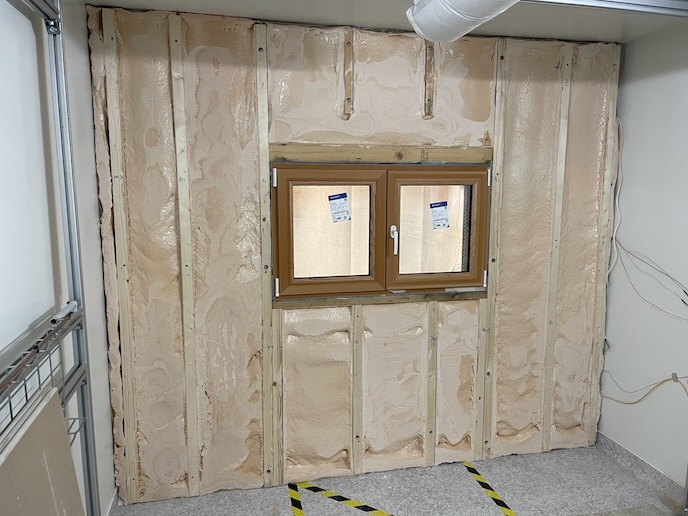
For this, EASI ZERo pulled together a consortium of industrial partners that included SMEs and larger companies, as well as research institutes. New products were developed and then tested in research facilities. These products included wood panels constructed using recycled material and more bio-based binders (glues which tend to be fossil fuel-derived) The project team developed mycelium ‘mushroom’ insulation panels. Mycelium – thread-like underground networks of fungal strands – grows between insulated bio-based fibres and acts as a binder. Sprayable bio-based insulating foam, as well as a sprayable high-insulation render including aerogel, were also developed. Another innovative product was energy-storing bricks, designed to provide additional thermal control on the interior side of a building. “The bricks contain PCM (phase-changing material) capsules to store and release heat,” says Jay. The PCM capsules consist of encapsulated salt hydrates, less than 4 mm in diameter. Other products included better window and door frames with plant-based insulation and insulated blind boxes. The project also developed bio-based paint, and integrated photovoltaic tiles that respect the aesthetic of existing buildings.
Applying materials to retrofit existing buildings
These EASI ZERo components were first developed at the lab scale before being scaled up and tested in controlled research facilities. Specific stresses to simulate extreme weather conditions were applied to see how the materials would perform. “We also conducted computer simulations to see how these materials might be applied to retrofit existing buildings,” notes Jay. “This helped us to get a better idea of which combination of materials we should use to achieve high energy performances.” Comprehensive life-cycle assessments were also carried out. This work enabled the project’s industrial partners to identify which products hold most commercial promise. “Moving forward, we have also started to think about certification processes,” adds Jay.