What would Earth look like today if life never existed?

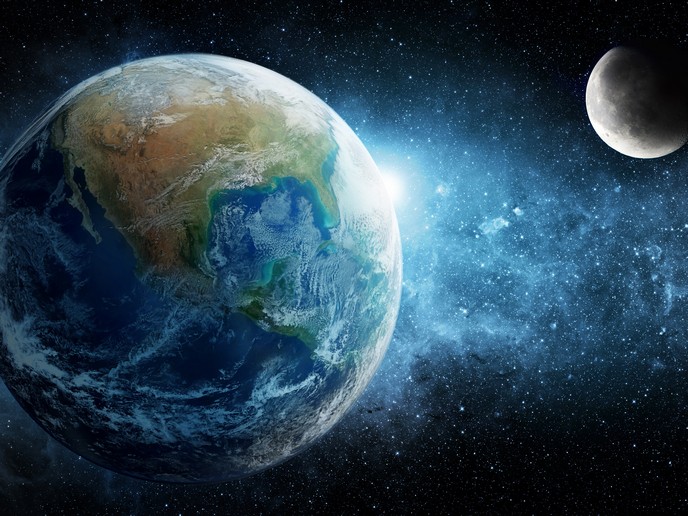
Astronomers have discovered over 6 000 planets outside our solar system(opens in new window). They are now scanning the atmospheres of these so-called exoplanets for chemical signs of life. The focus has turned to atmospheres like Earth’s that trap enough heat to keep liquid water on the surface, because water is the main ingredient for life. As telescopes like the Habitable Worlds Observatory(opens in new window) are being prepared to hunt for life on other worlds, we need a clear way to spot the difference between a habitable planet and an inhabited one. However, we still don’t know if life is needed to keep a planet liveable, or how a planet’s changing features affect its long-term habitability.
Cracking the code of habitability
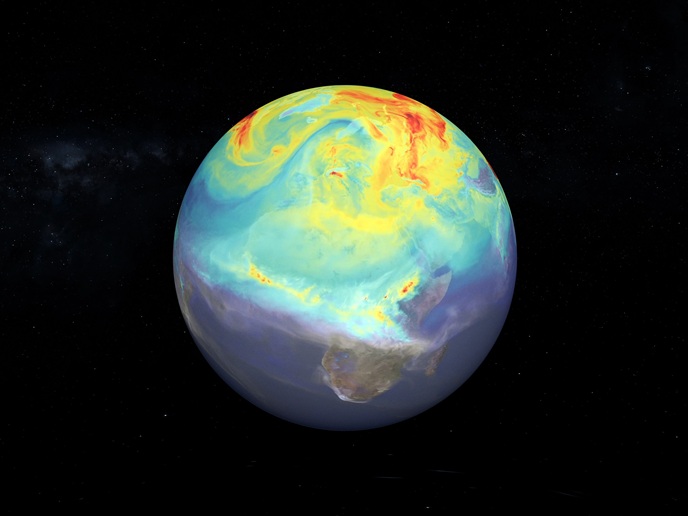
A research team led by the University of Washington (UW) simulated billions of years of Earth’s history to see how the planet changes over time. The results were published in ‘The Planetary Science Journal’(opens in new window). The researchers built a computer model of Earth without life, but adding its core, mantle, crust, atmosphere, oceans and sun energy to analyse how chemicals flow through the planet. Their analysis exploited an earlier model created in the lab of UW associate professor of astronomy Rory Barnes. By simulating 19 major planetary properties such as heat flow, ocean chemistry and surface temperatures, the research team tracked a virtual Earth across a 5-billion-year journey, from its creation to its future. This simulation can be used for any rocky planet to predict atmospheric changes and spot true signs of life. Study results showed that the model predicted that life might not be necessary to keep a planet habitable. “This model can help us see how habitable but non-living planets might mimic living planets,” commented lead author Samantha Gilbert-Janizek, who led the study as a UW astronomy doctoral student, in a news item(opens in new window). “When we interpret observations of an exoplanet’s atmosphere, this tool will help us determine the probability that what we observe indicates life on the surface.”
Chasing the ultimate cosmic question
Thanks to the new and improved model, scientists can test any planet by entering its basic traits and seeing if a lifeless model matches its real atmosphere. If the model fails to match, the planet then becomes a fascinating target for finding life. “Dr Gilbert-Janizek’s work represents an exciting step toward understanding where life can exist in the universe,” Barnes stated. “After more than a decade of work by many scientists, Dr Gilbert-Janizek has finally completed a model of the Earth that simultaneously reproduces properties of Earth’s core, mantle, surface and atmosphere. That calibration gives us confidence that future simulations of exoplanets will be accurate.” The model can also help guide how we build future space telescopes to probe distant worlds. “Realizing the ambitious goals of a telescope like the Habitable Worlds Observatory requires decades of work across many generations of scientists,” Gilbert-Janizek concluded. “I’m so grateful to join this lineage and one day pass the torch to the next generation so that we can continue chipping away at this question of whether or not we are alone in the universe.”